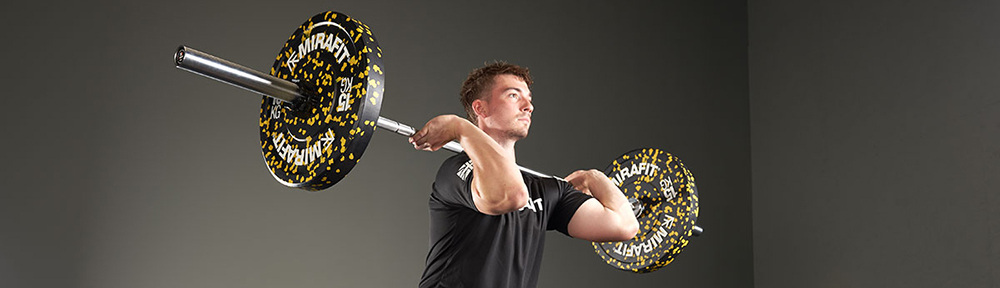
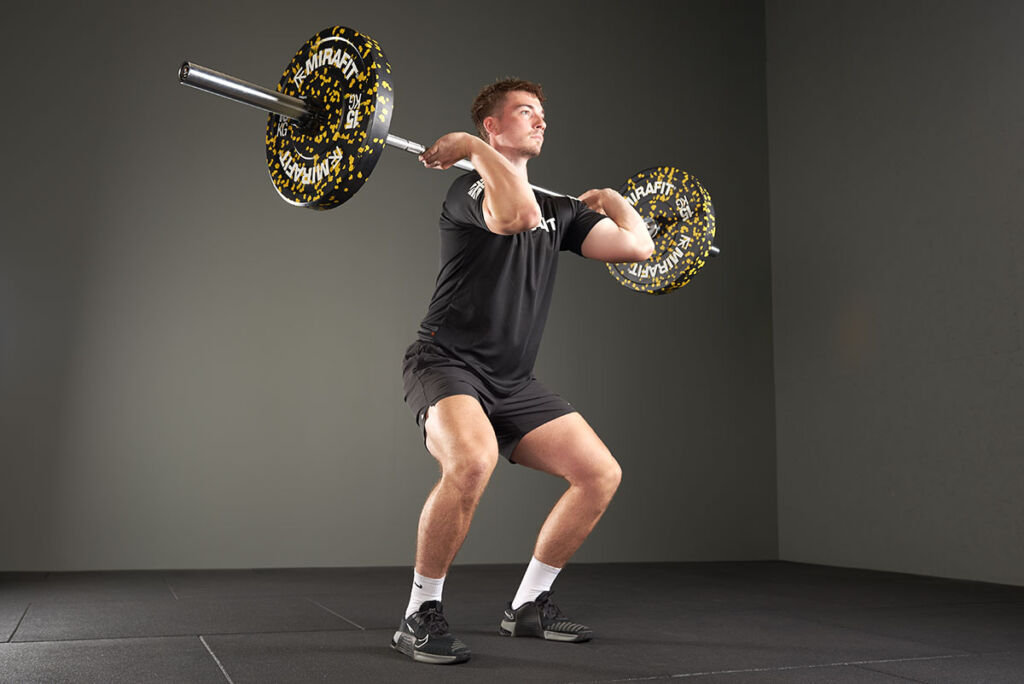
It’s the final element of the Olympic clean and jerk and a staple in functional fitness. With its many variations, the jerk is an effective exercise to build strength, muscular endurance, and even cardiovascular fitness. The following 15 jerk adaptations will let you mix up your training routine, progress in your fitness journey, and break through any performance plateaus.
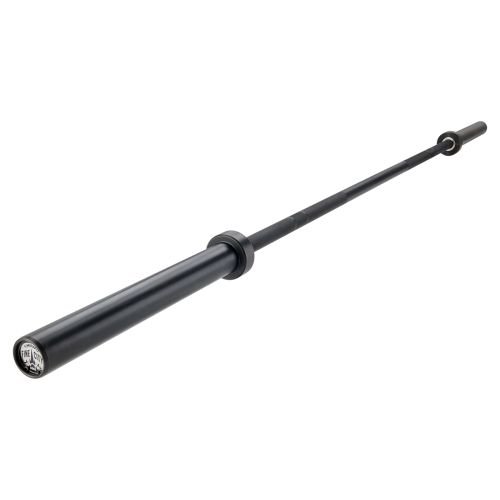
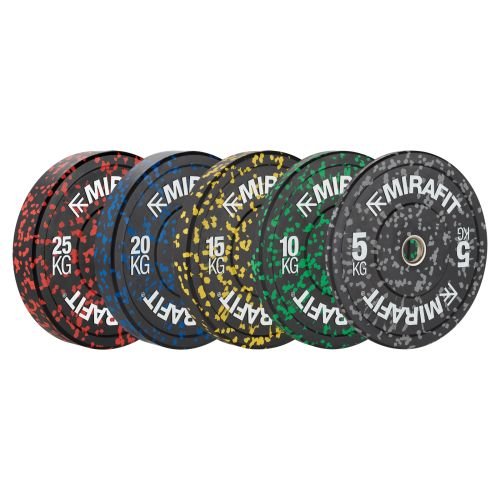
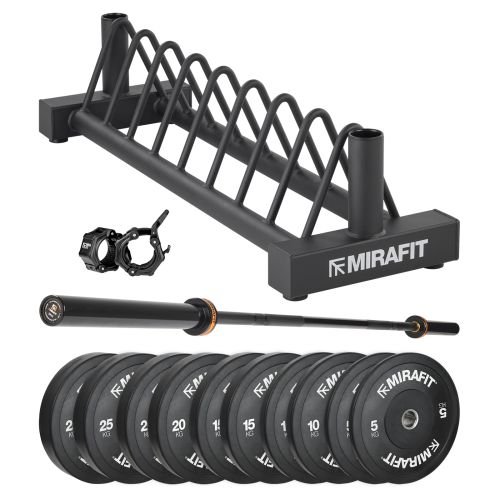
Mirafit M3 Olympic Barbell with Bumper Plate Set and Weight Storage Stand
In short, the jerk is a movement where the athlete pushes a 7ft Olympic Barbell from their shoulders into an overhead position. The jerk consists of a dip, drive, and punch. The rep is only complete when the athlete stands tall with both feet underneath their body, demonstrating full control over the bar. The jerk often determines how well an athlete performs in Olympic weightlifting competitions, as they can typically squat more than they can lift overhead – all the more reason to add a couple of jerk variations to your training!
1 - Traditional Jerk
The traditional jerk uses a barbell, which starts on the athlete’s shoulders and is punched into an overhead position. We will use this jerk variation as our starting point. Each jerk that follows will take cues from this one. The jerk, when executed correctly, is a demonstration of technique, power, and strength. In order to move your barbell effectively, it is key that you hit each technical phase of the lift with precision. Practise the jerk with a Technique Bar first before adding plates.
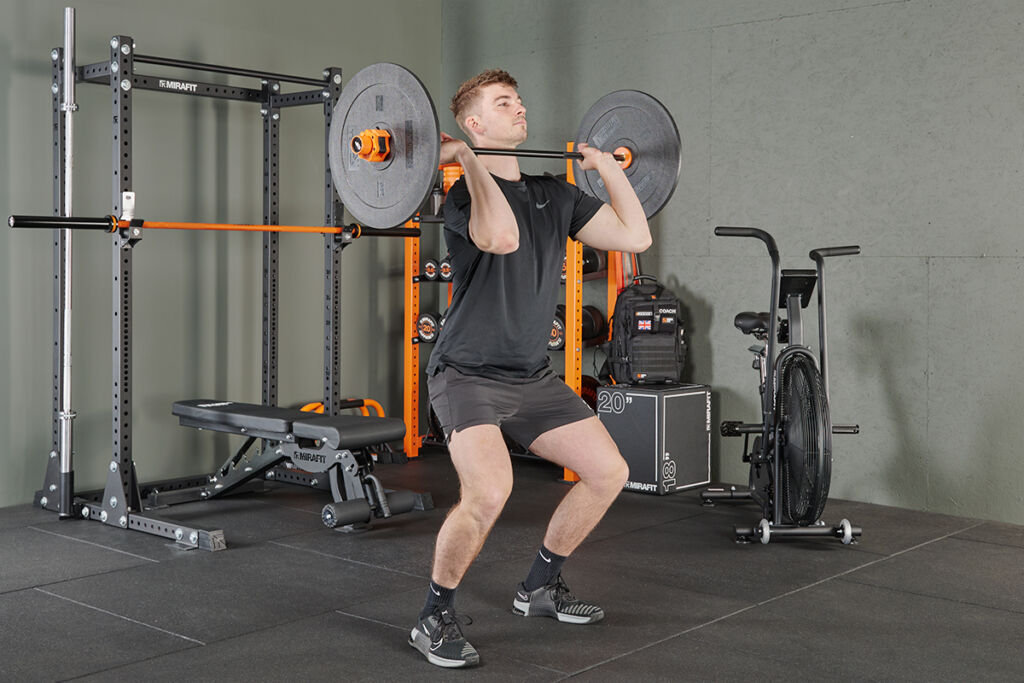
• Starting Position - Start with your feet directly underneath your hips and with the barbell in a front-rack position on your shoulders.
• Dip - Take a deep breath and brace your core. Bend your hips and knees slightly to prime your body to drive the bar overhead. It’s key that you do not allow the bar to pull you forwards.
• Drive - Extend your hips and knees in a powerful movement. Again, make sure you move vertically only!
• Punch - The velocity of the drive will cause a moment of ‘weightlessness’ on the bar, this is when you should pull your head back and punch the bar overhead.
• Receive - As soon as the bar clears your face, push your body down into a strong power position, moving your feet into a shoulder-width stance, but keeping your hips above knee height.
• Finish - Complete the rep by bringing your feet back underneath your hips and extending your hips and knees.
2 - Clean and Jerk
The clean and jerk is a combination of two compound weightlifting movements: the clean and the jerk. In the most common variation, the athlete lifts the bar from the floor to receive a barbell in a full squat and uses the split position in the jerk. These are typically the variations that allow the lifter to shift the most weight, but power cleans and push jerks are also good options.
3 - Clean and Push Jerk
Instead of dropping into a split position to receive the barbell, an athlete can choose to push themselves down into a power position with a parallel stance. Due to the high receive position of the bar, this variation requires an even more powerful drive and punch overhead. Newer athletes who haven’t mastered the split jerk technique yet may feel more comfortable with the push jerk as the required footwork is less complicated.
4 - Push Jerk
In the push jerk, the athlete pushes their body down into a power position (hips above knees) with their feet moving from a parallel stance directly underneath the hips to a parallel stance at shoulder width. Because the bar is caught at a relatively high point, this is a great exercise to practise an aggressive, powerful drive upwards, and a fast, coordinated dip into the receiving position.
5 - Power Jerk
The power jerk is similar in execution to the push jerk, and often both terms are used interchangeably. However, whereas the feet move from hip to shoulder width in the push jerk, in the power jerk, both feet remain in their original position. The power jerk can be used as a regression for the push jerk, allowing the lifter to focus on finishing the drive phase of the lift without having to worry about foot placement.
6 - Tall Jerk
The tall jerk is a drill designed to develop the drop under the barbell after punching it upwards. The aim is to use your arms to push yourself under the bar – letting yourself fall under the bar simply isn’t fast enough. You perform a tall jerk by starting with an empty bar in front rack position, raise the bar to forehead level, pause, then quickly push yourself into your split position while pushing the bar fully overhead.
7 - Behind the Neck Jerk
In a behind-the-neck jerk, the bar is positioned in a high back rack position. It’s normally done from a Power Cage or jerk blocks. Jerking behind the neck removes some elements that might limit an athlete’s performance in the traditional jerk, such as wrist and shoulder mobility, difficulty keeping an upright torso in the dip phase, or fear of pushing the barbell past their face.
8 - Split Jerk
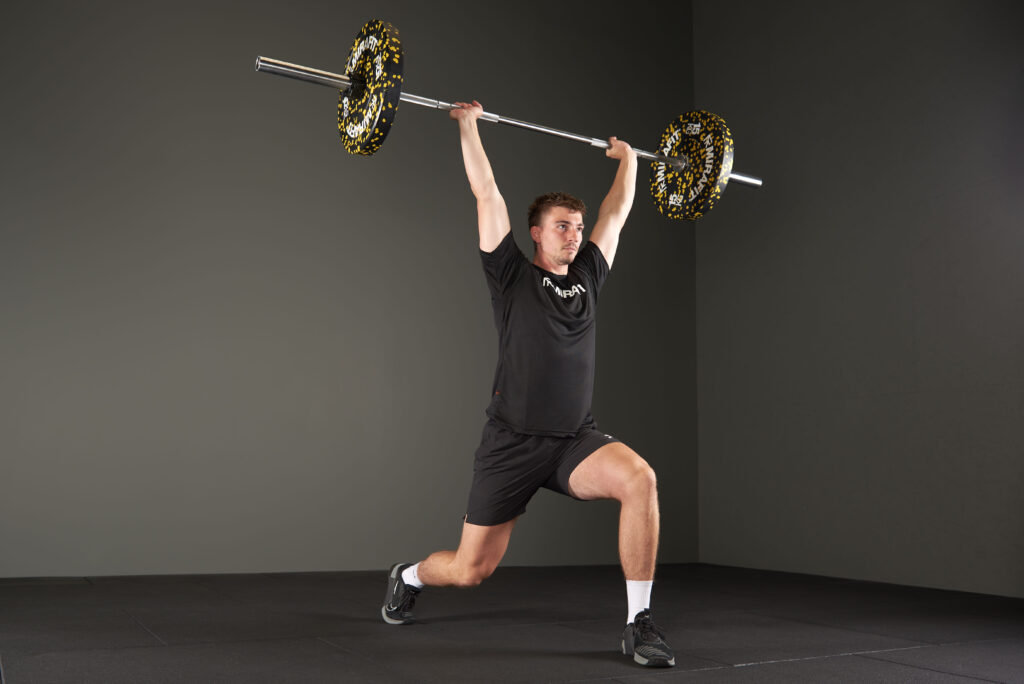
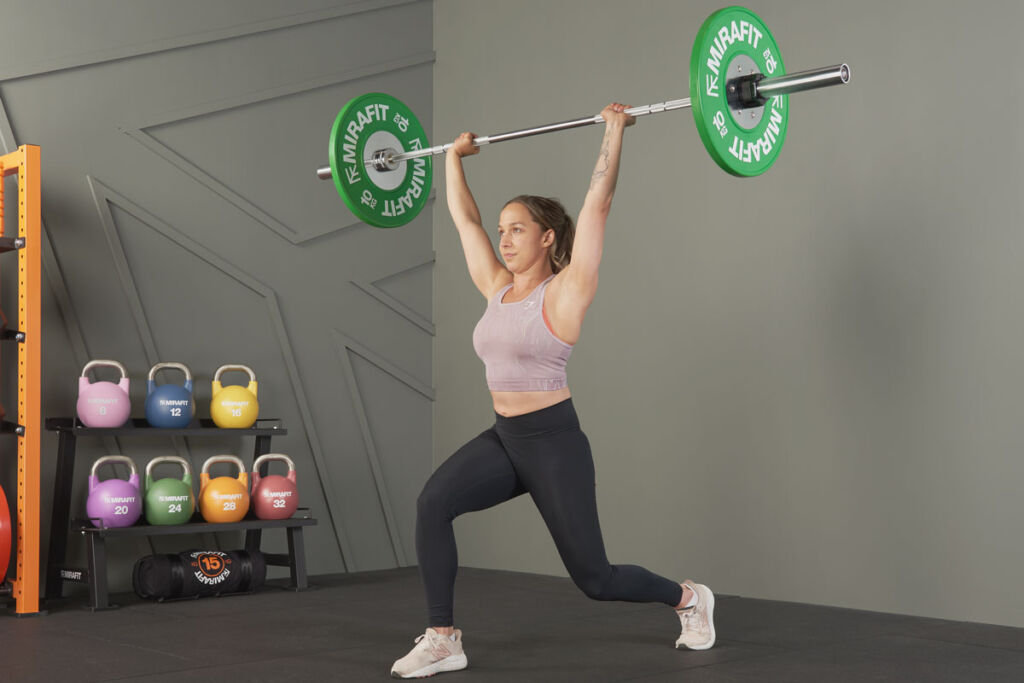
The split jerk is the most common variation used during Olympic weightlifting competitions. While punching the barbell overhead, the athlete pushes themselves into a ‘lunge’ position. This not only allows them to catch the bar at a lower point (requiring less upward drive) but also creates a wider base, which provides more stability.
9 - Squat Jerk
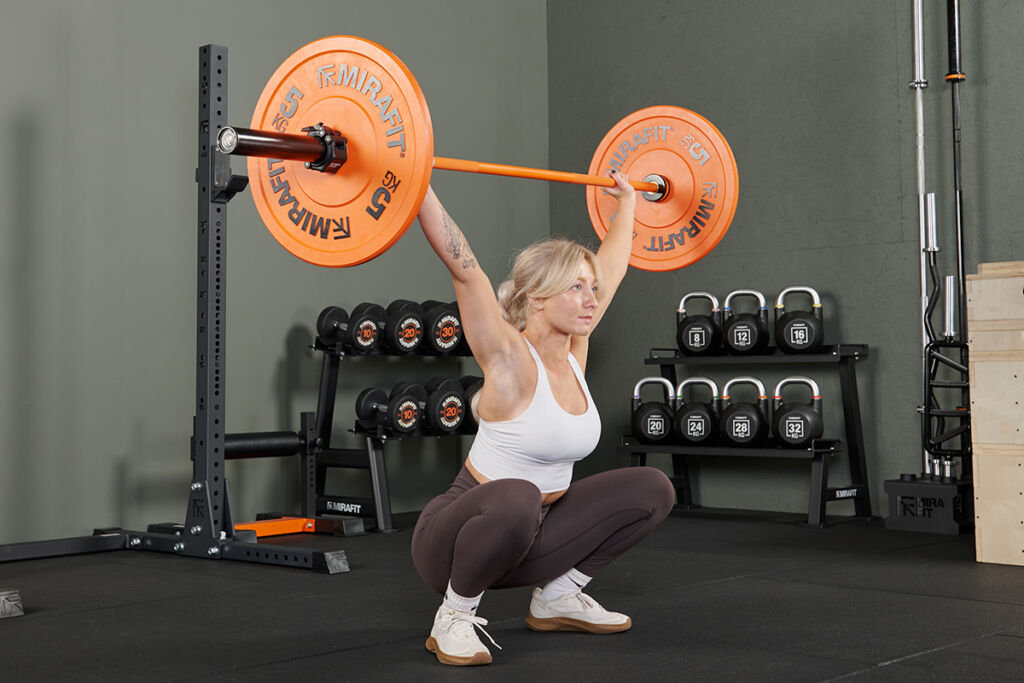
In the squat jerk, the athlete drops into a full-depth squat while driving the barbell overhead. Like the split jerk, the squat jerk requires less elevation in the drive phase. As the bar is received in an overhead position with a narrow grip on the bar and in a full squat, this is a more advanced jerk variation and requires significant lower and upper body mobility.
10 - Pause Jerk
The pause jerk should be an athlete’s go-to variation to reinforce and build strength in key positions of the jerk. Add a 2-3 second pause at the bottom of the dip and split position to build more strength and stability in those forms. You should practise the pause jerk with an empty barbell to begin with and gradually build the weight as you become more confident.
11 - Jerk Drive
The jerk drive is a partial jerk exercise that focuses on the dip and drive elements of the movement. The athlete doesn’t punch the barbell all the way overhead in this variation. You start the movement with the barbell in a front rack position. Dip, drive, and, at the top of the drive, push the bar off your shoulders to about eye height before letting it come back down again. The jerk drive teaches the athlete to keep their torso upright and balanced in the dip and emphasises the power of the drive.
12 - Dip Jerk
The dip jerk is an exercise normally done from jerk blocks. The athlete lifts the barbell from the blocks, which should be set up under shoulder height. With the barbell in a front rack position, the athlete should brace as they would normally do before a jerk and drop quickly into their dip position. The rep is finished when the athlete stands up again. The goal is to create fast, downwards force while maintaining a perfect dip position. This will help build power and stability in the first phase of the jerk.
13 - Jerk Balance
The jerk balance is an advanced drill to train dropping into the split position. The athlete should hold the bar in their front rack position and step out into their split. From there, the athlete brings their front foot back by a single foot’s length. The athlete dips, drives, and punches the bar overhead while stepping into their full split stance.
14 - Dumbbell Jerk
The cues for the dumbbell jerk are the same as for a barbell jerk. Yet performing the jerk with two dumbbells adds an extra demand for accuracy, coordination, and control as the two dumbbells move independently from each other. Practising jerks with dumbbells can reveal and remedy any weaknesses in either the left or right shoulder and arm.
15 - Single-Arm Dumbbell Jerk
The single-arm dumbbell jerk focuses on unilateral strength and coordination. The challenge here is to resist any turning of the torso towards the body’s loaded side. You can use a single dumbbell to perform split, push, and power jerks.
By including different variations of the jerk, you can work on specific weaknesses, refine your technique, or finally break through that plateau that’s been holding you back. Whether you are a competitive Olympic Weightlifter or are just starting out in the gym, each of the above exercises will help you build strength, power, and coordination. If the jerk is a new movement for you, remember to start light, focus on technique, and stay consistent in your training. Before you know it, you’ll have taken your fitness journey to a whole new level.
For more content, follow us on Instagram, YouTube, TikTok, and on our official Mirafit Facebook page.
Tags: Equipment > Bars and Weight Plates ; Exercise Type > Strength