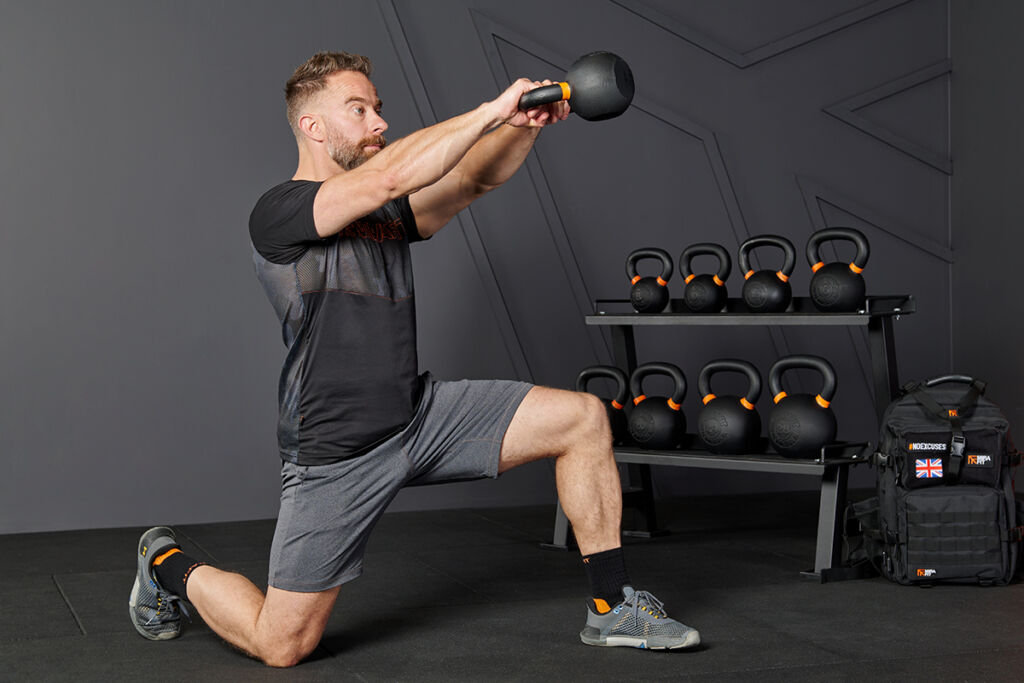
If I had to ask you how many different exercises you could do with a kettlebell you would probably be able to rattle off a number of exercises. I am willing to bet that the first exercise that jumps to mind is the kettlebell swing! However, how many different kettlebell swings do you use in your training?
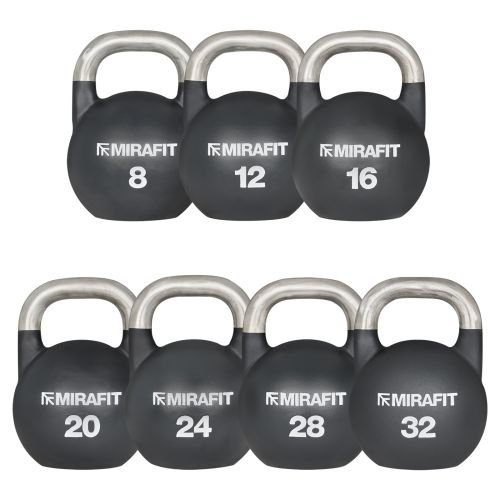

The kettlebell swing is an excellent exercise to develop the hip hinge movement, developing strength and power in the hamstrings, glutes and back. But did you know that there is a large number of swing variations that you can include in your training. Here is a list of 20 of our favourite kettlebell swing variations. How many do you already include in your training?
- 1 - Russian Kettlebell Swing
- 2 - American Kettlebell Swing
- 3 - Alternating Kettlebell Swing
- 4 - Double Kettlebell Swing
- 5 - Kettlebell Side Swing / Rotational Kettlebell Swing
- 6 - Staggered Stance Kettlebell Swing
- 7 - Dead Stop Kettlebell Swing
- 8 - Half Kneeling Kettlebell Swing
- 9 - Walking Kettlebell Swing
- 10 - Side Stepping Kettlebell Swing
- 11 - Kettlebell Squat Swing
- 12 - Kettlebell Low Pull
- 13 - Kettlebell High Pull
- 14 - Banded Kettlebell Swing
- 15 - Kettlebell Skier Swing
- 16 - Kettlebell Reverse Lunge Swing
- 17 - Kettlebell Swing Clean
- 18 - Kettlebell Release Swing
- 19 - Kettlebell Swing to Push Press
- 20 - Kettlebell Single Arm Side Swing
1 - Russian Kettlebell Swing
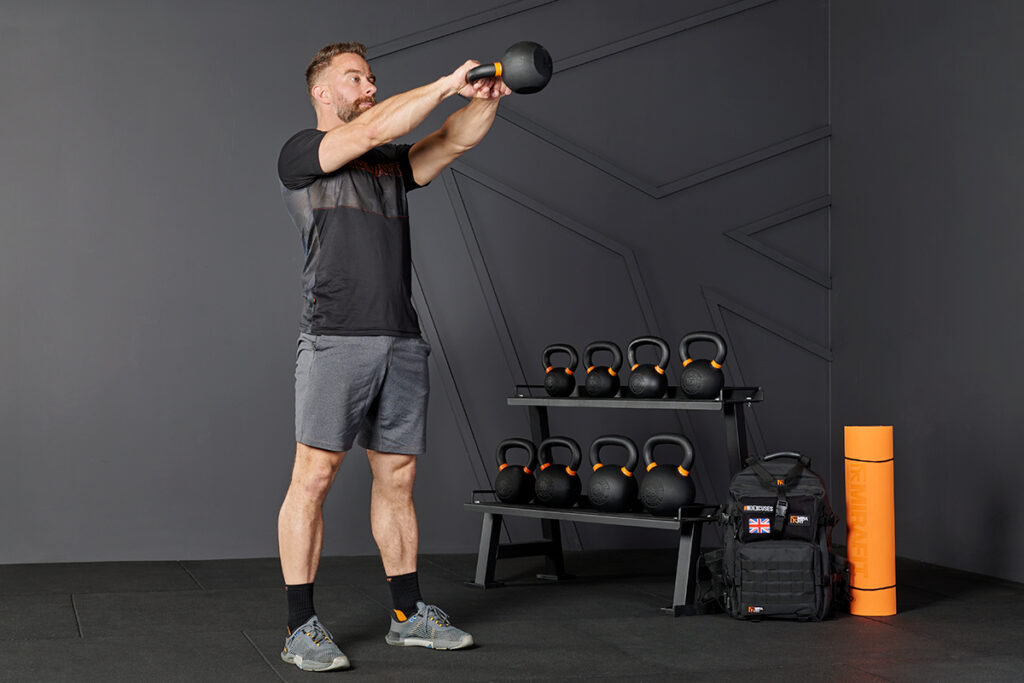
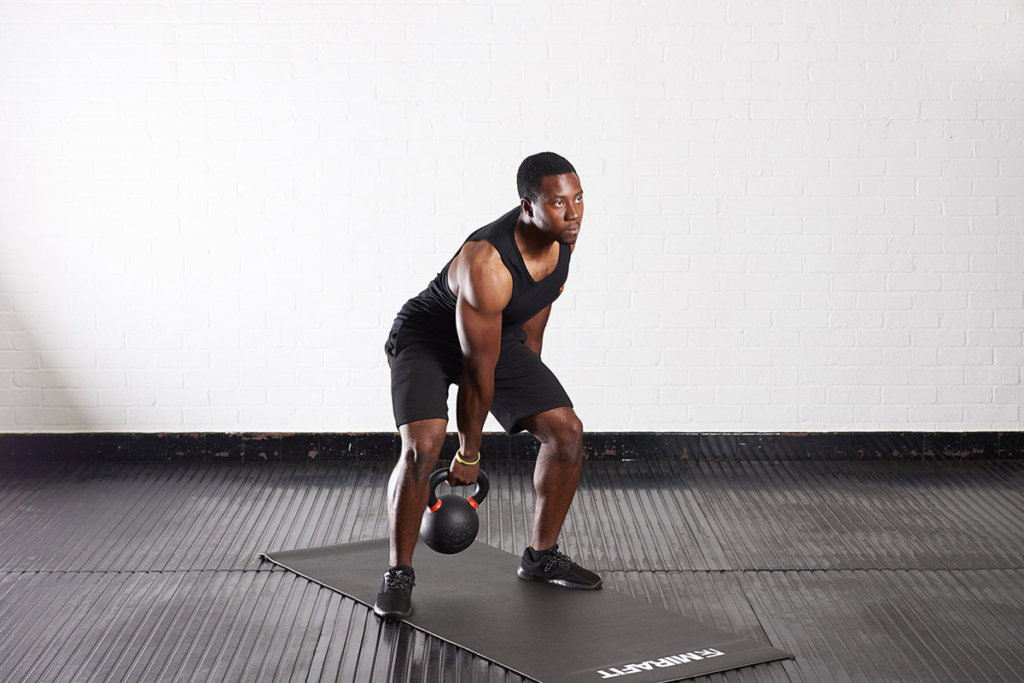
The most common version of the swing involves the weight being brought up to shoulder height. Using a heavier weight can help to strengthen the hip hinge.
2 - American Kettlebell Swing
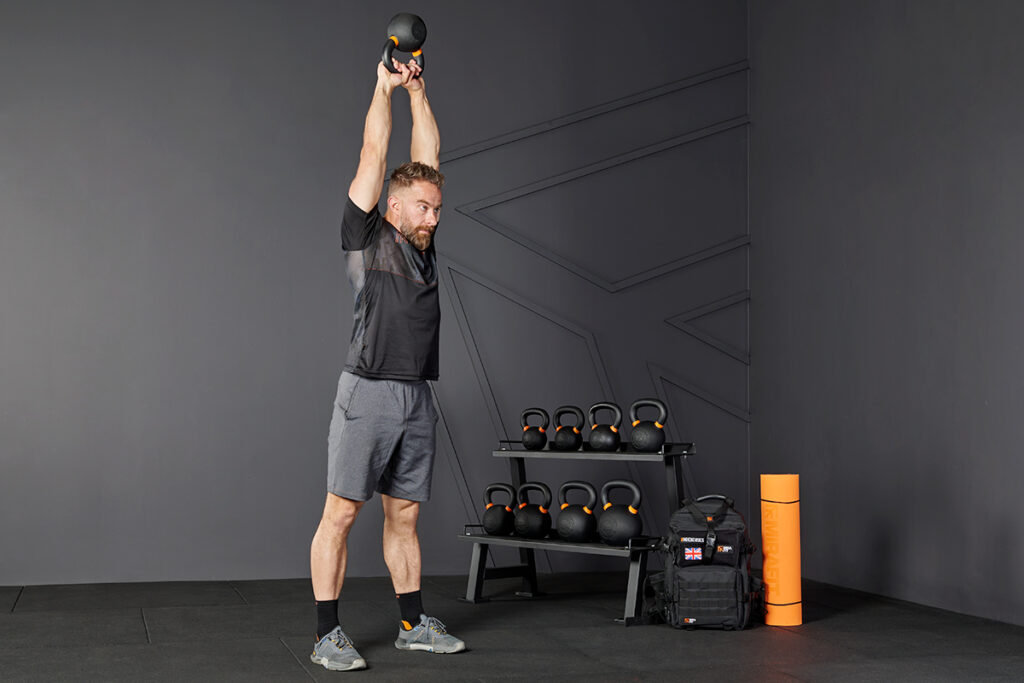
This swing will require greater shoulder mobility and strength.
• Start with your feet shoulder width apart.
• Perform a hip hinge and drive the hip.
• At the top of the motion push your chest through your arms to get the weight above your head.
3 - Alternating Kettlebell Swing
The alternating kettlebell swing places more emphasis on a single side of your posterior chain. The core is strengthened by resisting the rotational effect of switching the weight from side to side.
• Start with your feet shoulder width apart. Lean forward from the hips with the knees slightly bent and grip the kettlebell with a single hand.
• Perform a Russian kettlebell swing with the single hand but at the top of the swing switch hand before starting the downward swing.
• Perform another kettlebell swing and once again alternate hands at the top of the swing.
4 - Double Kettlebell Swing
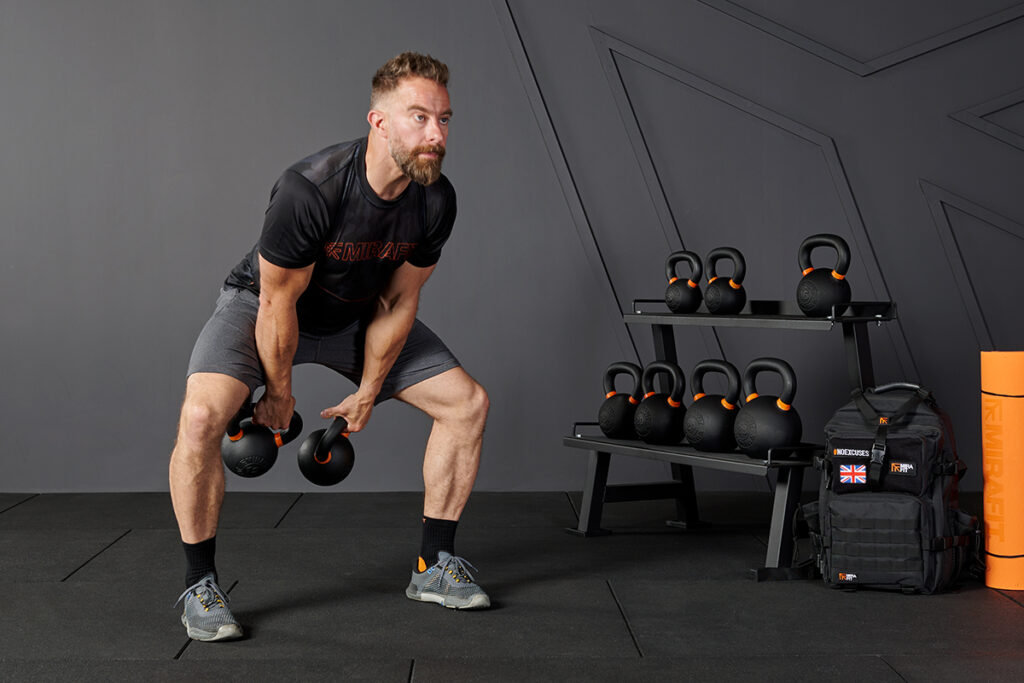
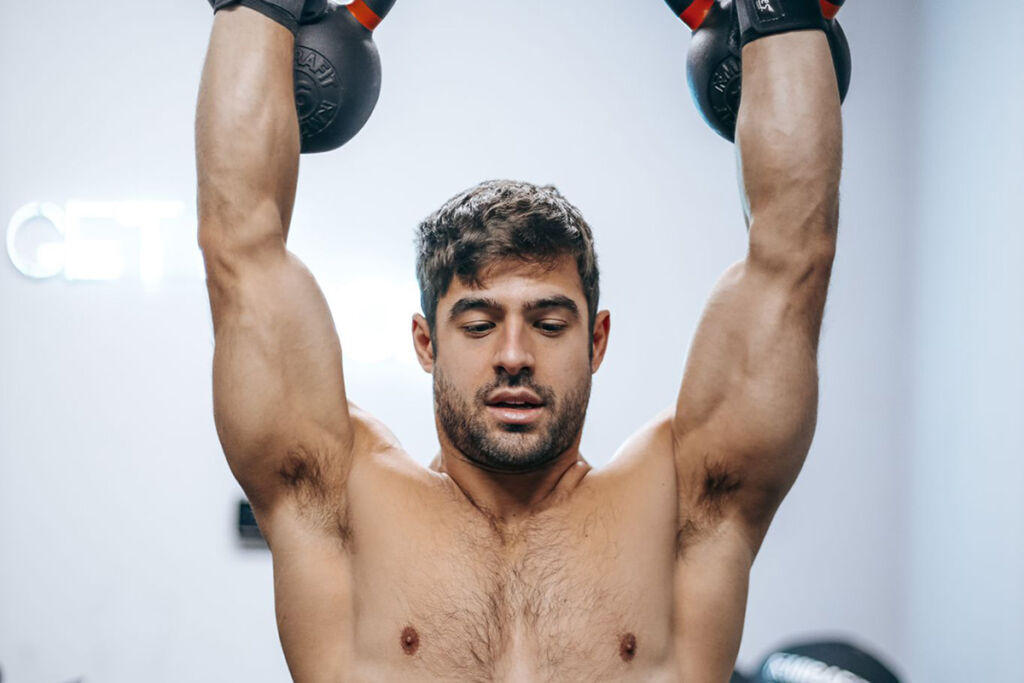
By holding a kettlebell in each hand while doing the swing you are effectively doubling up on the weight, requiring more muscle activation. Lifting a weight in each hand during the same swing also requires a greater amount of stability and control, particularly through the core, glutes, shoulder stabilisers and back.
• Start with your legs slightly wider than usual as you are swinging two kettlebells now.
• Lean forward from the hip and grip a kettlebell in each hand with the palms facing each other.
• Perform the kettlebell swing, swinging both kettlebells at the same time.
5 - Kettlebell Side Swing / Rotational Kettlebell Swing

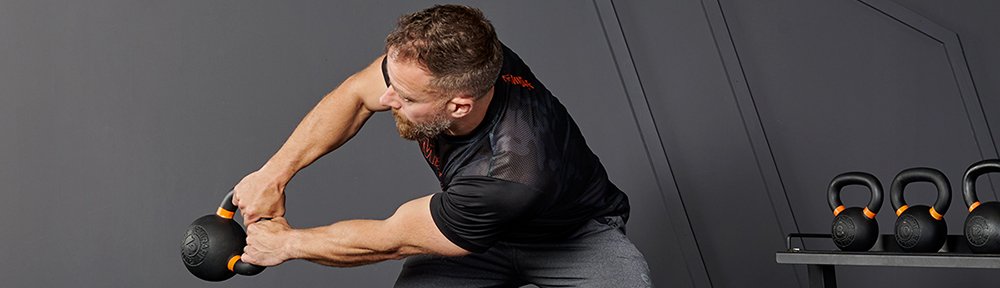
This exercise involves a transverse movement, resulting in the gluteus medius and oblique abdominals getting a great workout. With the rotational movement in the swing, you do not get the full advantage of the hip hinge movement so make sure that you start with a lighter weight.
• Start with your feet shoulder width apart and place the kettlebell to the outside and in front of your right foot.
• Lean forward from the hips as you would for a standard swing but reach to the kettlebell with both hands while shifting your weight to the left leg.
• Drive your hips forward at the same time that you rotate towards your left side. The kettlebell should reach shoulder height to the side of your.
• Follow the downward swing back towards the starting position before performing the next swing.
6 - Staggered Stance Kettlebell Swing
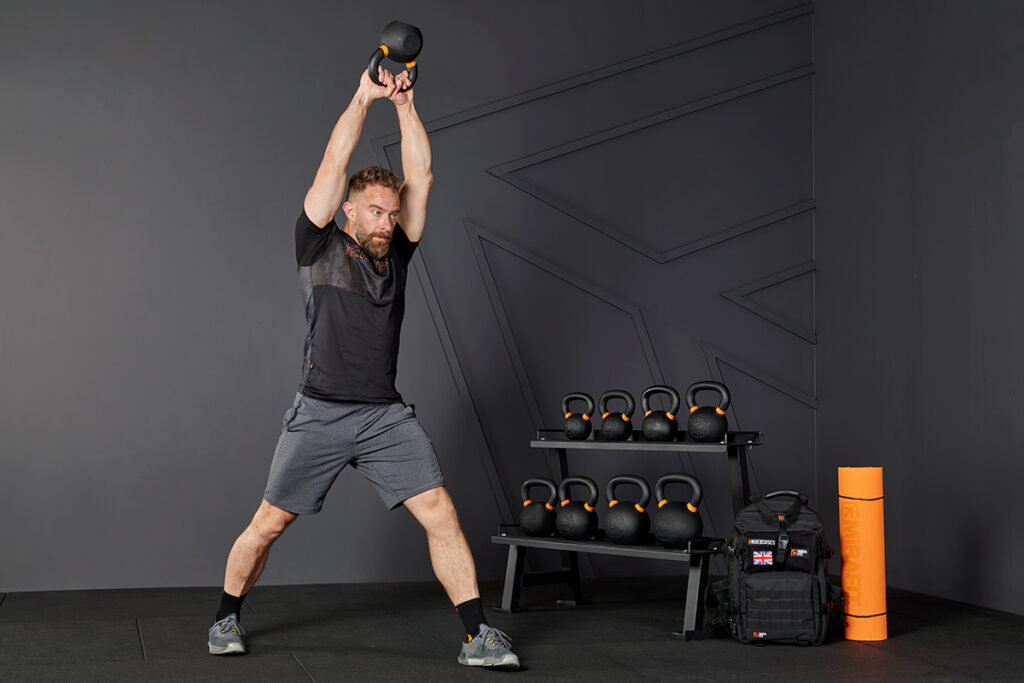
By using a staggered stance, you are placing the emphasis of the kettlebell swing onto the front leg. This is a great way to ensure that there is not a dominant side during a standard kettlebell swing.
• Stand with your feet shoulder width apart, but with one foot slightly in front of the other.
• Perform the swing as you would for a standard kettlebell swing.
7 - Dead Stop Kettlebell Swing
This swing performs only one rep at a time. This results in two great benefits. The first is that it allows you to focus on your form by resetting each time. While this might not sound so important, when you are doing high reps it is easy to lose your form.
The second advantage is that it requires a far more powerful muscular contraction. With the higher rep versions there is a lot of momentum that helps you load for the next rep. With the pause between each rep of this version you need to regenerate the power.
• Start with your feet shoulder width apart and the kettlebell an arm stretched in front of you.
• Lean forward and reach out with straight arms to grip the kettlebell. Make sure your form is correct and your core is engaged.
• Now pull the kettlebell back between your legs before driving your hips forward to perform the swing.
• On the downward swing allow the kettlebell to swing between your legs before placing it back on the ground in the starting position.
• Pause and ensure the form is correct before starting again.
8 - Half Kneeling Kettlebell Swing
Whenever you use a half kneeling position, your core is required to stabilise more. Especially the glute medius of the front leg. You also resist the rotational effect created by swinging the kettlebell from a half kneeling position, creating a stronger core.
• Start with your right knee on the floor and your left leg bent at 90 degrees.
• Grip the kettlebell with your right hand.
• Perform a hip hinge movement and drive the kettlebell up as you would for a single arm kettlebell swing.
9 - Walking Kettlebell Swing
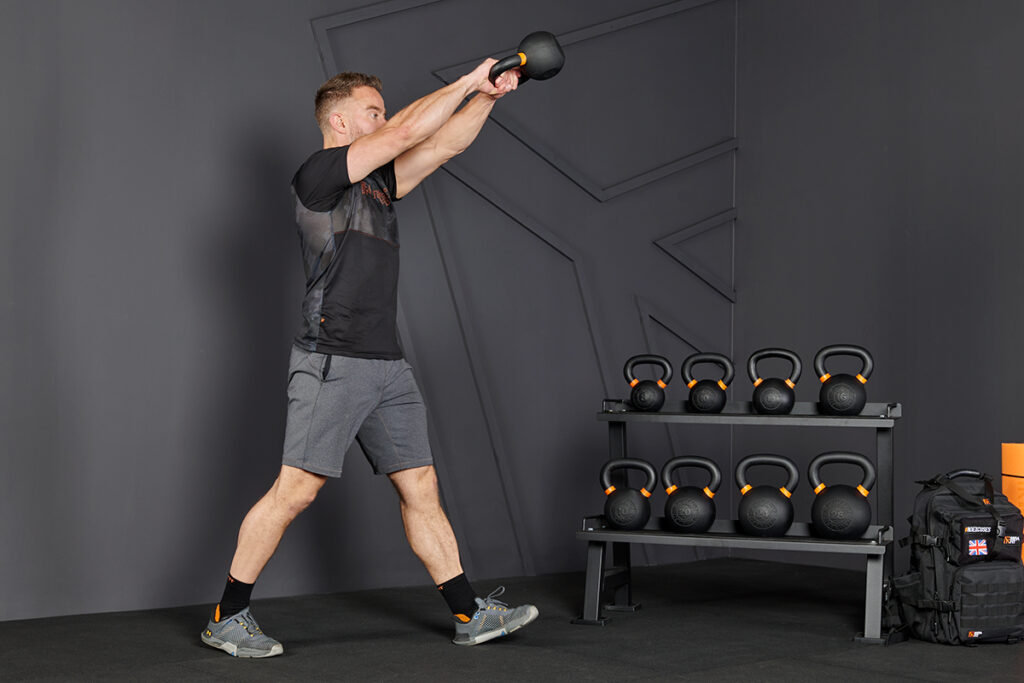
By doing a kettlebell swing and shuffling forwards you are not only giving the legs an additional workout but your core has to work hard to maintain its balance.
• Start with your feet shoulder width apart.
• Drive the kettlebell forwards.
• As the weight reaches its peak take two small steps forward before performing the hip hinge on the return path of the kettlebell.
10 - Side Stepping Kettlebell Swing
Get the muscles of the legs firing by including a side lunge within the kettlebell swing.
• Start with your feet shoulder width apart and perform a standard kettlebell swing from this position.
• As the kettlebell reaches the top of its swing, step sideways with your right foot and lean forward as you would for your standard swing.
• Drive the kettlebell back forward and at the same time drive off your right foot to bring your feet together.
• When the kettlebell reaches the top of the swing for the second time, step with your left foot to the side and lean forward again as the kettlebell swings downward.
• Once again drive the kettlebell back up. Keep alternating this sideways step with the left and right foot.
11 - Kettlebell Squat Swing
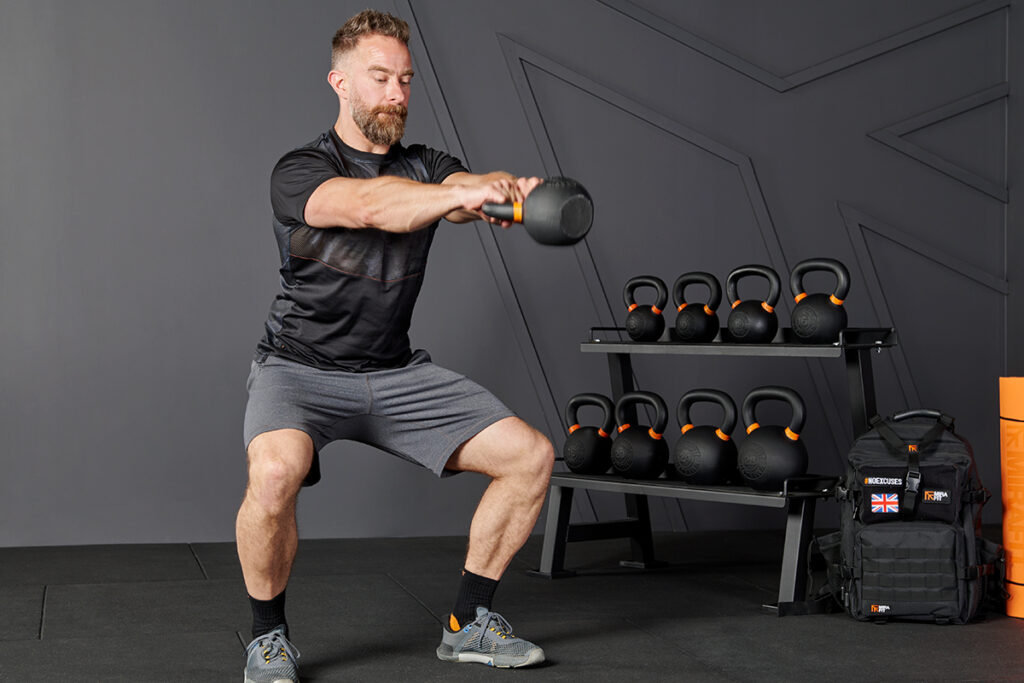
You could think of this version as the incorrect movement pattern for kettlebell swings. Many people perform a squat movement rather than a hip hinge movement. This is considered the incorrect form, but it is a movement you could add into your program if you are doing it intentionally. The squat swing will target the front of the legs, namely the quads, more than a standard swing.
• Start with your feet hip width apart.
• Instead of leaning forward from the hips to grip the kettlebell, sink down into a squat position.
• Explosively stand up and swing the kettlebell in front of you before sinking back into the squat position during the return swing.
12 - Kettlebell Low Pull
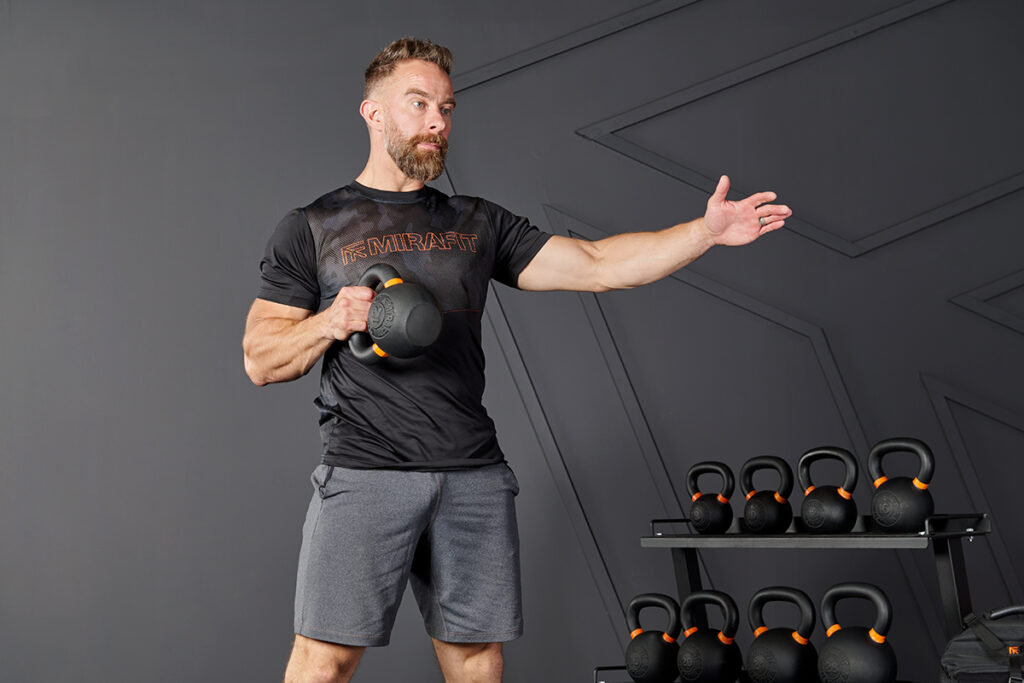
This single arm exercise combines a single arm swing with a rowing motion that targets the latissimus dorsi in addition to the posterior chain.
• Perform a single arm kettlebell swing.
• As the kettlebell reaches weight height, at the moment that it pauses before the kettlebell returns on its down swing, pull the weight into your hips with your palms facing your midline.
• Immediately push the kettlebell forwards again and allow it to return on its downward arc.
13 - Kettlebell High Pull
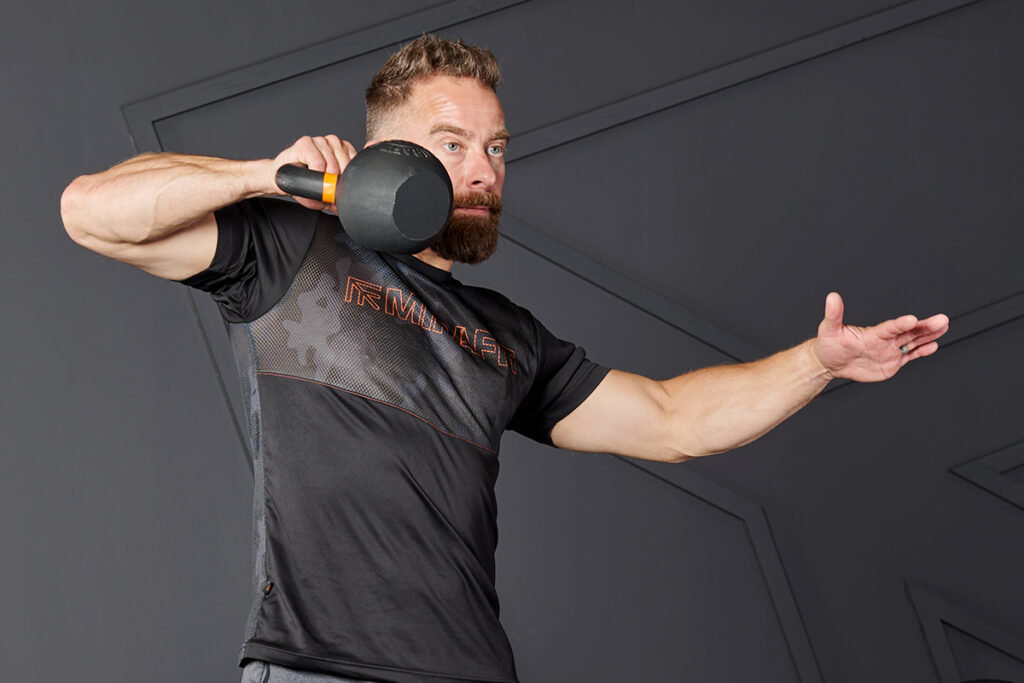
Another single arm swing with a pull. This time the high pull requires the upper traps and deltoids to be active.
• Start by performing a single arm swing but as the weight starts its forward arc pull the weight up to shoulder height with your elbows out to the side.
• Allow the weight to drop and swing back between your legs to start the next rep.
14 - Banded Kettlebell Swing
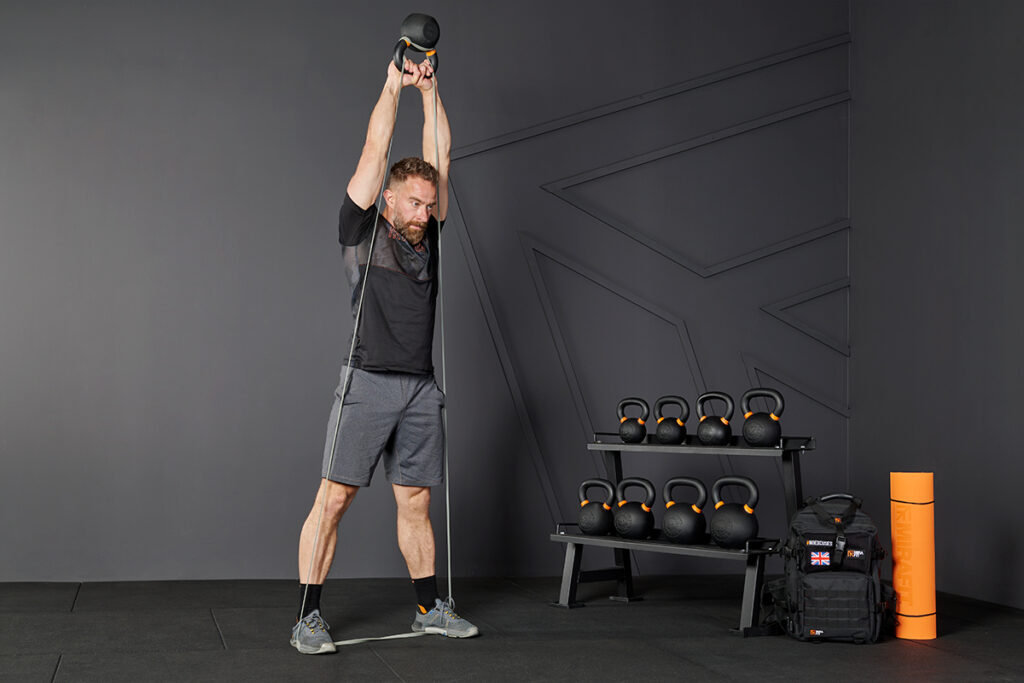
The banded swing is a great way to progress your kettlebell swing. By attaching a resistance band to the kettlebell the resistance of the swing is increased, particularly where momentum often takes over. This increases the required muscle activation and greater strength and power gains. It is also a good option if you only have access to a lighter kettlebell and want to progress your strength.
• Loop a resistance band through the handle of a kettlebell.
• Get into your starting position and loop the opposite side of the band under both feet to anchor the kettlebell and perform the kettlebell swing.
15 - Kettlebell Skier Swing
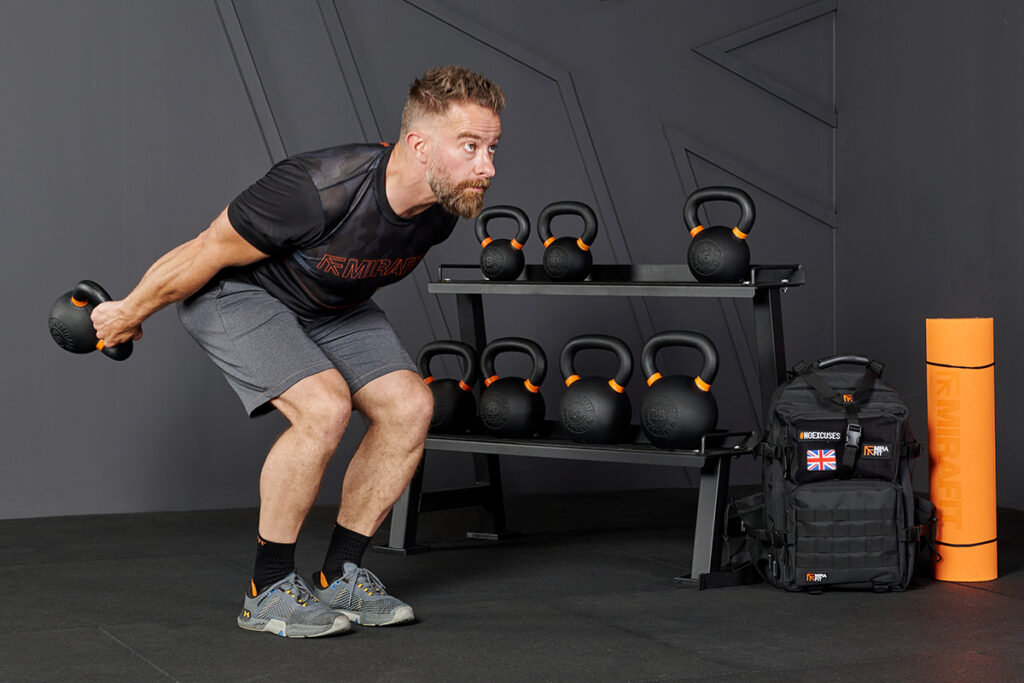
Similar to the double kettlebell swing, you will have a kettlebell in each hand. The difference is that the kettlebells start and finish on the outside of your body. This difference causes you to have a narrower stance, making it more challenging on the body to remain stable. This helps develop a stronger core while doing the swings.
• Start with your feet under your hips. Grip a kettlebell in each hand and let your arms hang to the side of your body.
• Lean forward and then drive up to swing the kettlebells from this position.
16 - Kettlebell Reverse Lunge Swing
This exercise has it all. The reverse lunge will get the glutes and quads burning. Core strength and stability is developed by having an offset weight as well as balancing on one leg. Don’t forget hip flexor strength when you raise your leg.
• Start with a kettlebell in your right hand.
• Step back with your left foot.
• Instead of just stepping back up to the starting position to complete your lunge, do the movement explosively and drive the hips forward to get the kettlebell to swing.
• The left leg should drive up so the thigh is parallel to the floor.
• As the kettlebell starts its downward arc, step back into a reverse lunge again.
17 - Kettlebell Swing Clean
The kettle swing clean is a combination of a swing movement and clean movement. Both movements rely on a hip hinge motion. By including the clean movement into the exercise you generate more power when driving the kettlebell into a rack position.
• Start with the kettlebell on the floor about a foot in front of you and your feet shoulder width apart.
• Hinge from your hip and grip the kettlebell with a single hand.
• Pull the kettlebell backwards between your legs before driving the hips forwards.
• Keep your elbow tucked into your body and as the kettlebell reaches hip height pull it into the rack position by moving your arm around the kettlebell. The kettlebell shouldn’t be banging into your forearm.
• Pause before allowing the kettlebell to move forward to start the next swing.
18 - Kettlebell Release Swing
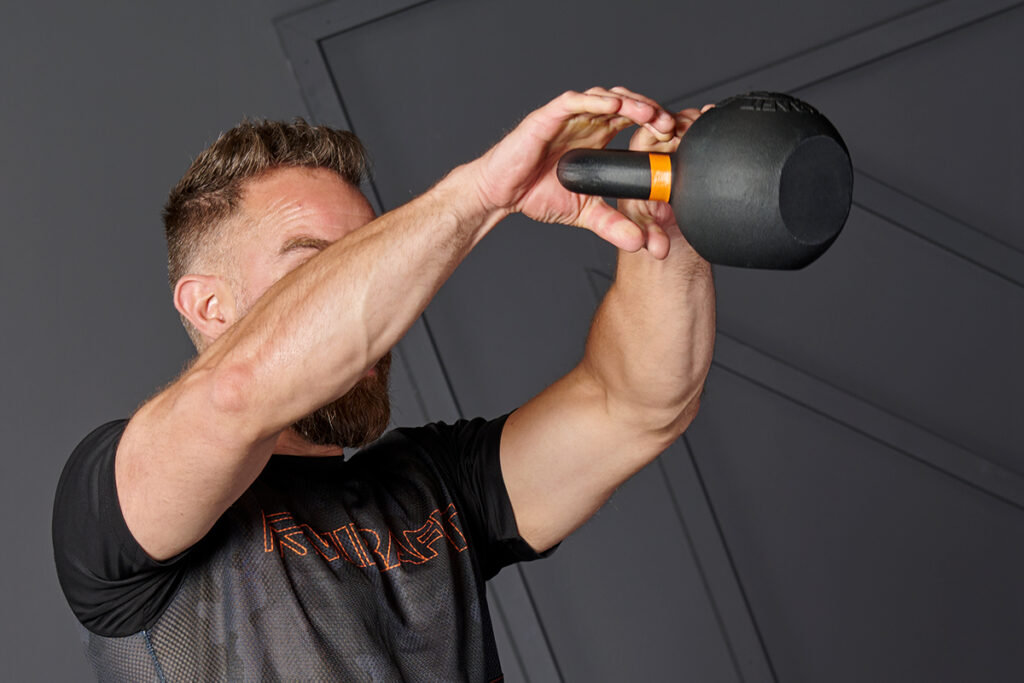
This two hand swing version involves you releasing the kettlebell at the top of the swing for a moment before catching it and starting the downward swing. This version of swing ensures that you are generating enough power from the hips to create the pendulum movement of the kettlebell. If you were not, then releasing the kettlebell becomes much harder. We recommend starting with a lightweight kettlebell until you have the perfect form.
• Perform a powerful kettlebell swing as usual.
• When the kettlebell is at the top of its movement, around chest height, release the kettlebell so that it appears to be motionless in the air before catching it again and performing the downwards section of the swing.
19 - Kettlebell Swing to Push Press
By performing a double kettle swing clean, you are in a good position to perform a squat to press. This will test the shoulders and give the quads a more active role during the exercise.
• Place two kettlebells on the floor in front of you. Lean forwards, keeping a neutral spine and grip the kettlebells so your palms face each other.
• Pull the kettlebells back between the legs and swing them forwards.
• Keep both elbows tucked in and when the kettlebells are hip height pull the kettlebells up to the rack position.
• Perform a quarter squat and drive up and at the same time push the kettlebells up above your head
• Return the kettlebells to the rack position before starting the downward swing.
20 - Kettlebell Single Arm Side Swing
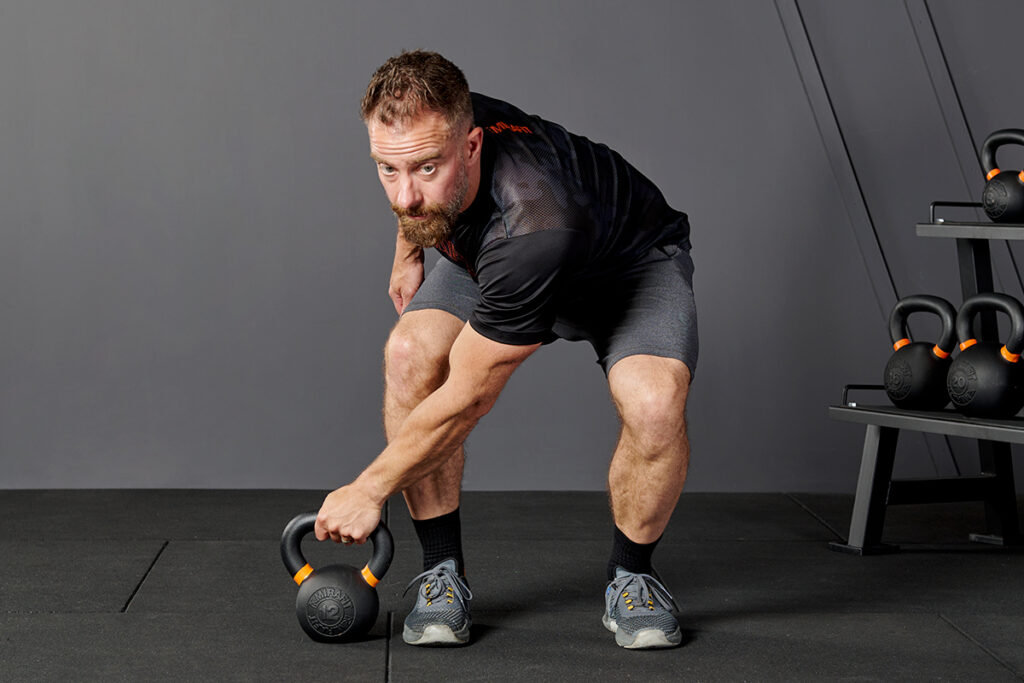
This second version of the side swing involves only a single hand which places more emphasis on the muscles of the upper back and shoulders.
• Place the kettlebell on the floor to the outside of your right leg and keep your feet under your hips
• Hinge forward and rotate slightly to grip the kettlebell with your left hand.
• Drive your hip forward and rotate to lift the kettlebell to the side.
• Allow the kettlebell to swing back past the front of your hips before performing the next swing.
The kettlebell swing is a powerful exercise that is incredible in developing strength and power of the posterior chain. But don’t think that the swing is limited to just that. There are many different versions of the swing which can be included in your routine to give yourself a full body workout and keep your training inspired and fun!
For more content, follow us on Instagram, YouTube, TikTok, and on our official Mirafit Facebook page.