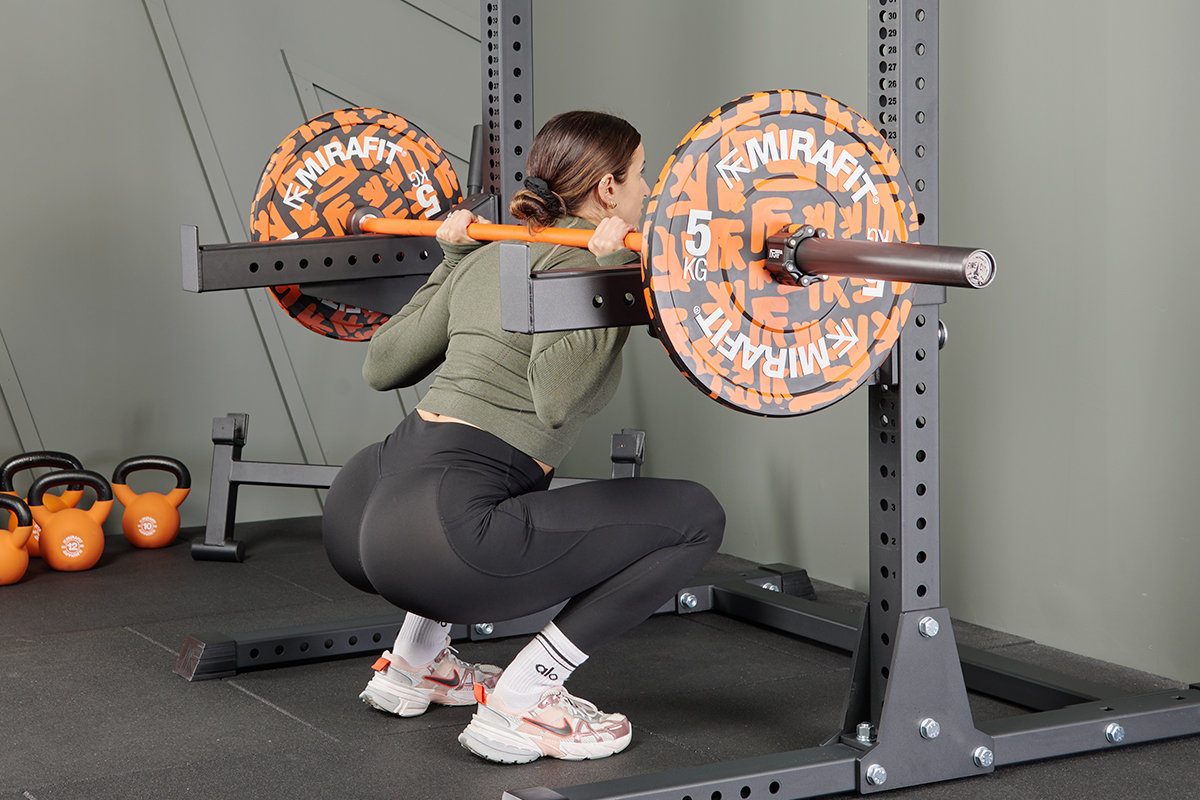
Anderson squats and pin squats are exercise variations to help you smash through squat plateaus and improve specific parts of the lift. These two movements are sometimes used interchangeably, but they’re quite different in both practice and purpose.
How To Do an Anderson Squat
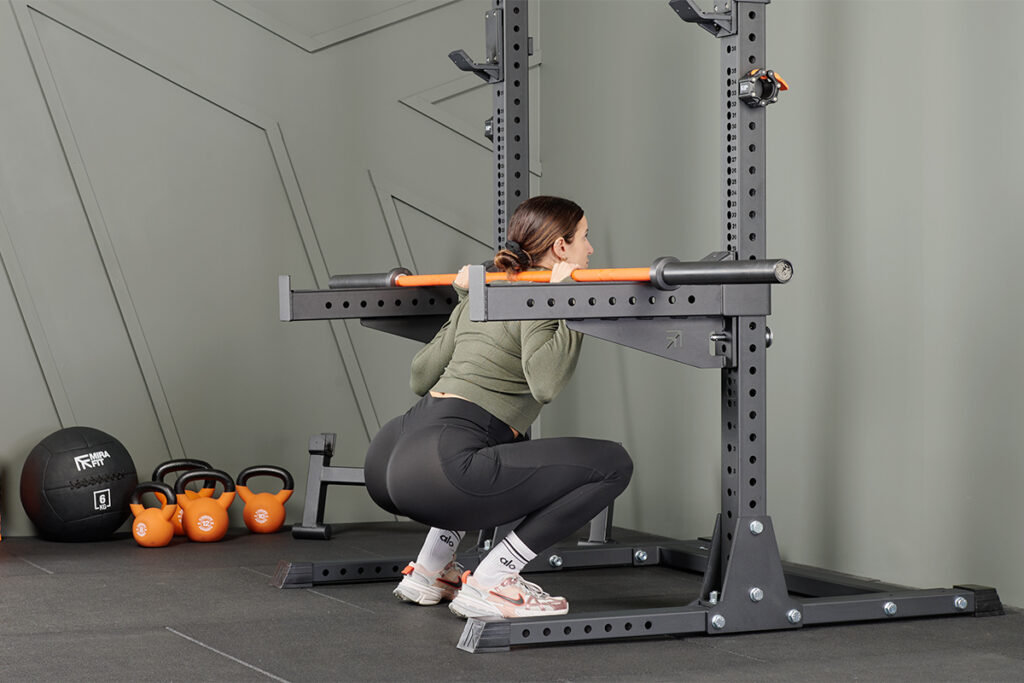
Unlike a regular squat, an Anderson squat starts from the bottom of the movement with the barbell resting on pins or safety bars. It focuses solely on the upward (concentric) part of the squat and removes the lowering (eccentric) phase completely. For this reason, the glutes, hip extensors and hamstrings perform a lot of the work.
By lifting the Barbell from a dead stop, you’re removing the stretch reflex that normally helps you to ‘bounce’ out of the bottom of a squat. Instead, you’ll be focussing on raw strength and power to drive the bar upward.
This movement is great for targeting certain sticking points during the ascent part of the squat - just set the safety bars to the specific height that’s causing you trouble.
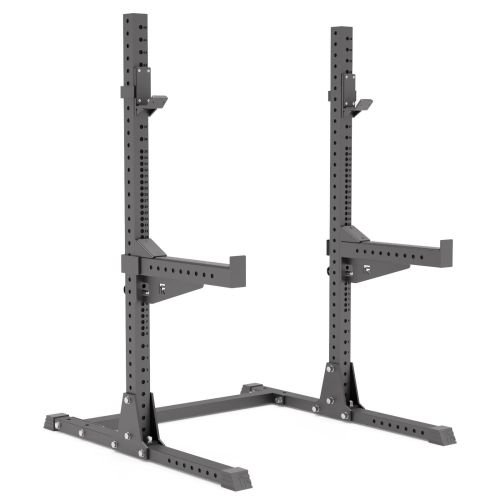
• Set the safety pins at your desired height - this can be below, at or above parallel depending on the phase of the squat you want to improve.
• Position yourself under the bar and create tension in your upper and lower body.
• Brace your core, prime your quads and engage your glutes before driving the bar upward.
How To Do a Pin Squat
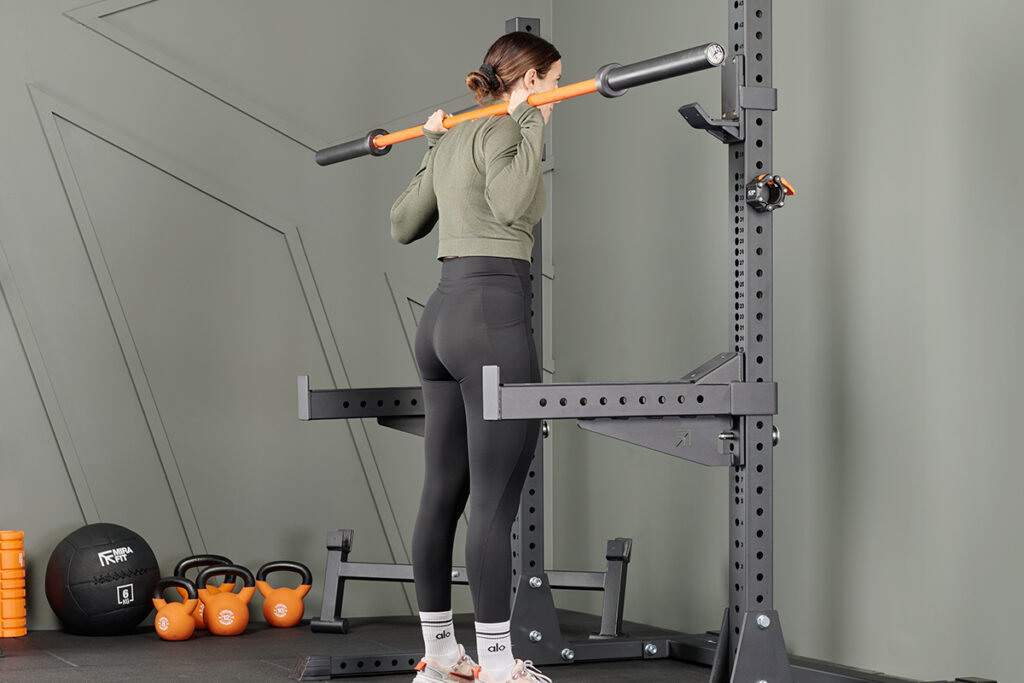
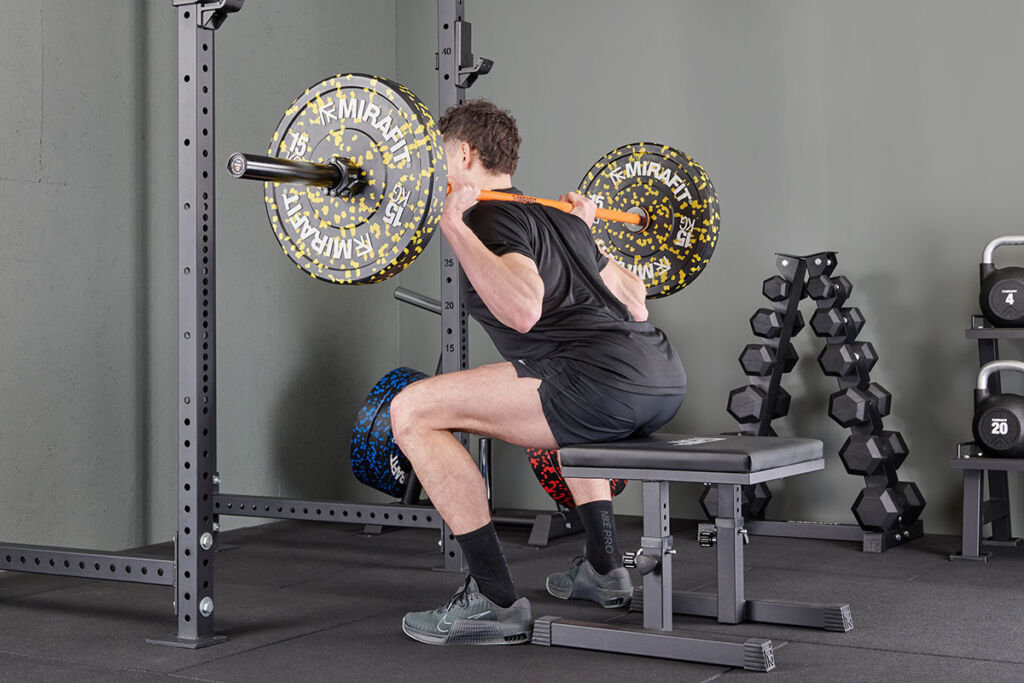
Like a regular squat, the pin squat starts from the top of the movement. It involves both the lowering and lifting portions of the squat.
The major difference to a regular squat is that you lower down to pins or safety bars set at a specific height. The pin squat is similar to a pause squat, however, rather than pausing for a number of seconds, the bar will only briefly touch the pins before you drive back up.
Pin squats are ideal for improving control, building proper squat depth and addressing sticking points at the bottom of the movement.
• Set the safety pins at your desired height in the Squat Rack - this can be above, at or below parallel.
• Start the squat at the top, lower with control until the bar touches the pins before driving back up.
What Are the Benefits of Anderson Squats?
• Develops explosive power and raw strength from a dead stop.
• Allows you to isolate specific angles of the squat for targeted improvement.
• Benefits other lifts by improving your leg drive.
• Focusses on glutes, hip extensors, core and hamstrings.
What Are the Benefits of Pin Squats?
• Helps build control and confidence at the bottom of the squat.
• Improves squat depth and reinforces proper squat mechanics.
• Works the quads, glutes, hip flexors, core and hamstrings.
What Are the Differences Between Pin Squats and Anderson Squats?
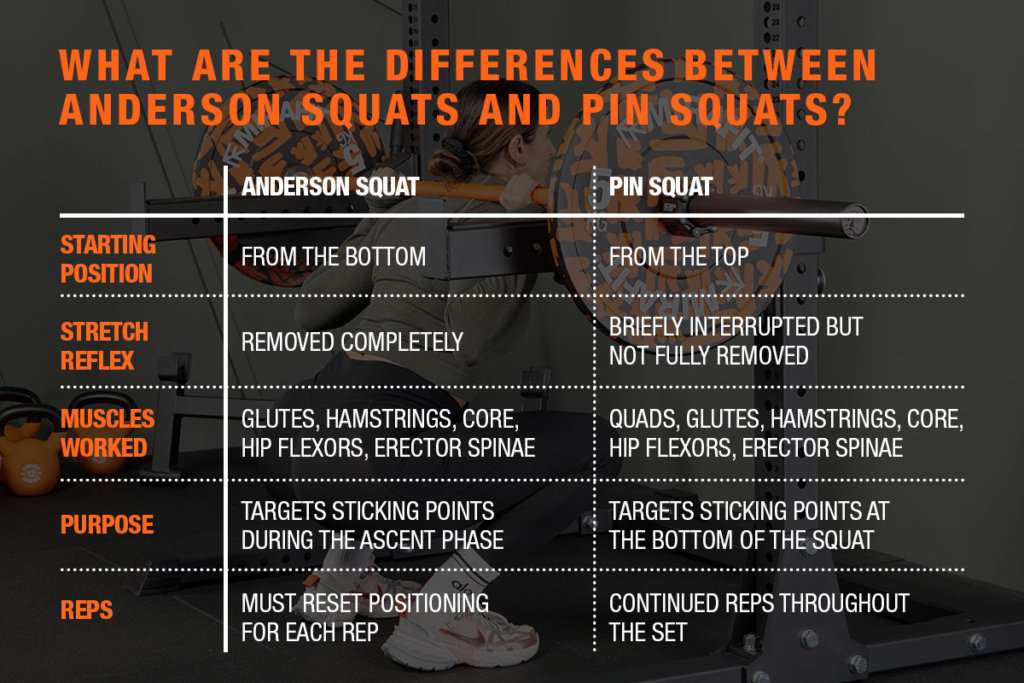
Anderson squats and pin squats are excellent exercises for targeting specific weaknesses in your squat. If you have a certain sticking point that needs addressing, give one of these moves a try, and take a look at our range of Barbell Racks.
For more content, follow us on Instagram, YouTube, TikTok, and on our official Mirafit Facebook page.
Tags: Equipment > Bars and Weight Plates ; Equipment > Power Racks and Cages ; Equipment > Squat Racks ; Exercise Type > Strength