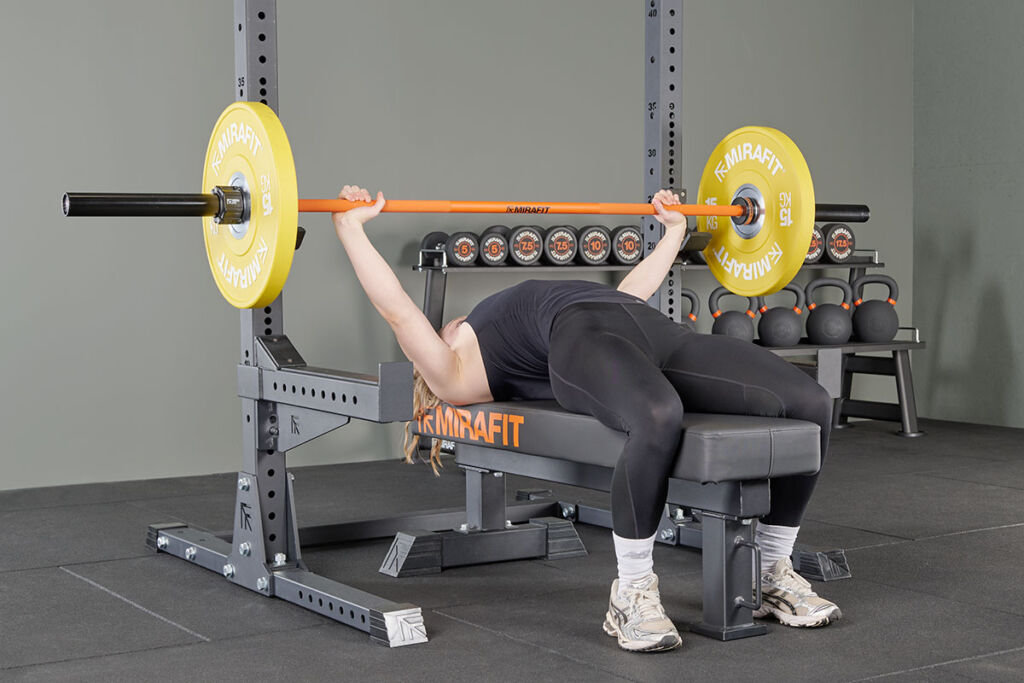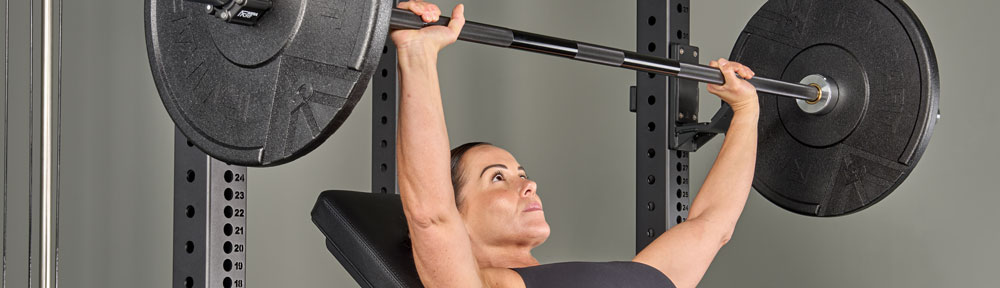
Did you know that adjusting the angle of your chest press can significantly change which muscles of the chest are emphasised? This blog will explain the differences between flat, incline, and decline chest press variations, letting you train more effectively and target the chest from multiple angles.
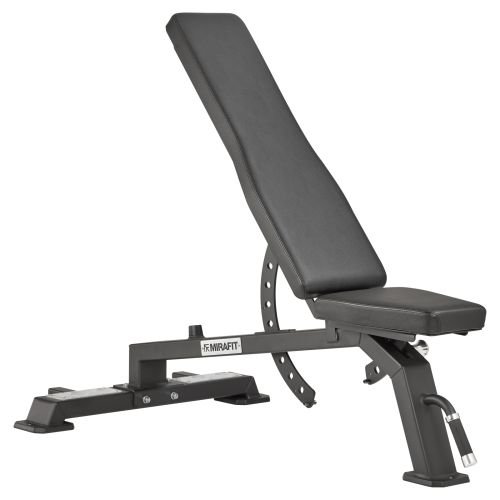
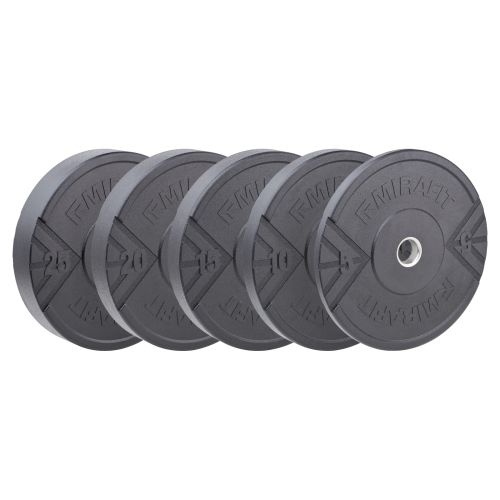
What Muscles Does a Flat Bench Press Work?
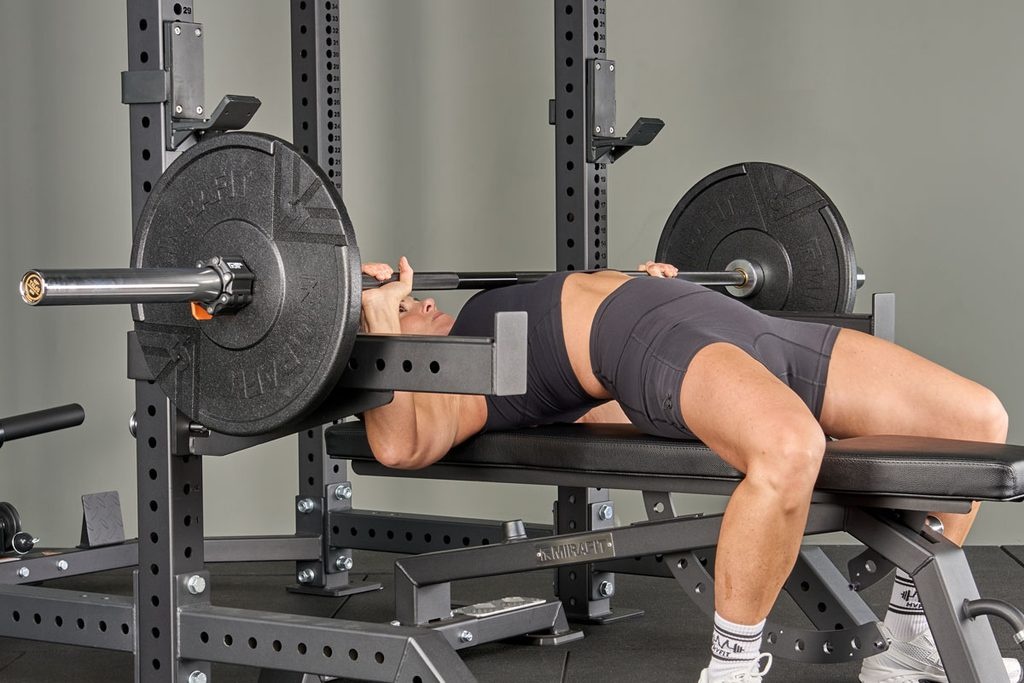
The flat bench press and flat chest press, whether with a Barbell or on a Chest Workout Machine, is the most commonly used variation and forms the foundation of most upper body training sessions. This is because it primarily targets the middle portion of the pectoralis major (pec major), whilst also recruiting the shoulders (anterior deltoids) and triceps. This variation allows you to press from a very stable and neutral angle, therefore you will likely lift heavier loads here compared to incline or decline variations. This makes it ideal for strength development and progressive overload over time.
The flat bench press is best for everyone from beginners to seasoned powerlifters. If you’re new to training and learning the movement, you’ll benefit from its simplicity. If you’re more experienced, you can continue to use it as your primary compound movement for chest growth and upper body strength.
What Muscles Does an Incline Bench Press Work?
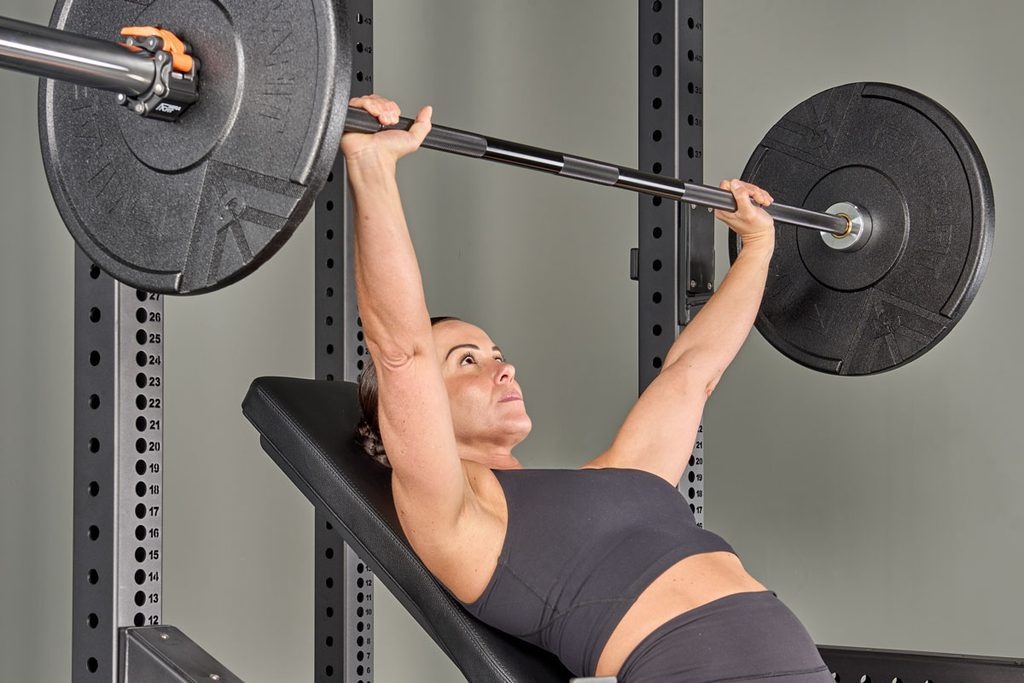
The incline bench press and incline chest press (performed between 15–45° angle) shifts the focus to your upper chest. This helps to develop a more balanced, fuller looking chest. A major benefit of incline pressing is improved upper chest activation, which also contributes to better shoulder stability and overall pressing mechanics in other exercises. However, because of the angle, the shoulders are more involved, you’ll probably lift less weight compared to when flat pressing.
This variation is particularly useful for you if you’re looking to improve chest size and balance across your lower and upper chest.
What Muscles Does a Decline Bench Press Work?
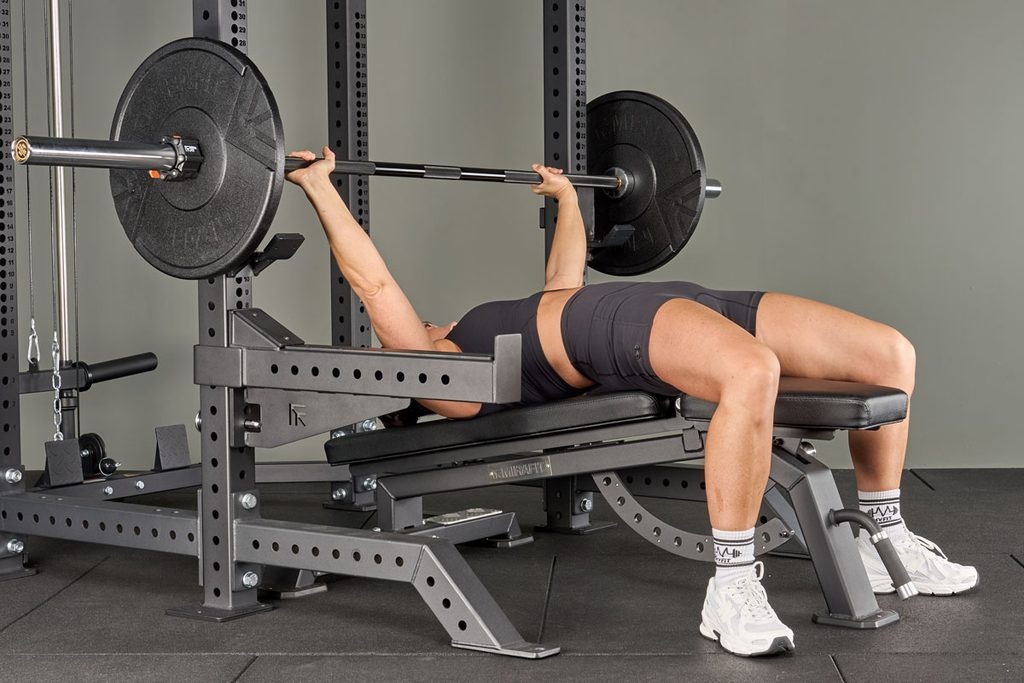
The decline bench press and decline chest press places you at a slight downward angle, targeting your lower chest muscles. This variation reduces your shoulder involvement, enabling stronger and more controlled pressing. One key benefit of this variation is that you might find the decline press more comfortable, particularly if you experience shoulder discomfort during flat or incline pressing. It also allows for relatively heavy loading whilst emphasising the lower chest, just to be sure to use a squat and Bench Press Rack with spotters.
The decline press is best suited for you if you want to develop your lower chest or if you struggle with shoulder pain during other pressing movements. It can also be a useful accessory movement for adding chest volume and variation to a programme.
Should You Do Flat, Incline, or Decline Bench Presses?
Each bench press variation has its place depending on your training goal. The flat press builds your overall max strength and mass, the incline press targets the often-neglected upper chest, and the decline press emphasises your lower chest while being more shoulder-friendly. For the best results, include a mix of all three variations in your training week to ensure well rounded chest development, improved performance, and a reduced risk of imbalances.
For more content, follow us on Instagram, YouTube, TikTok, and on our official Mirafit Facebook page.
Tags: Equipment > Bars and Weight Plates ; Equipment > Benches ; Equipment > Gym Machines ; Exercise Type > Strength