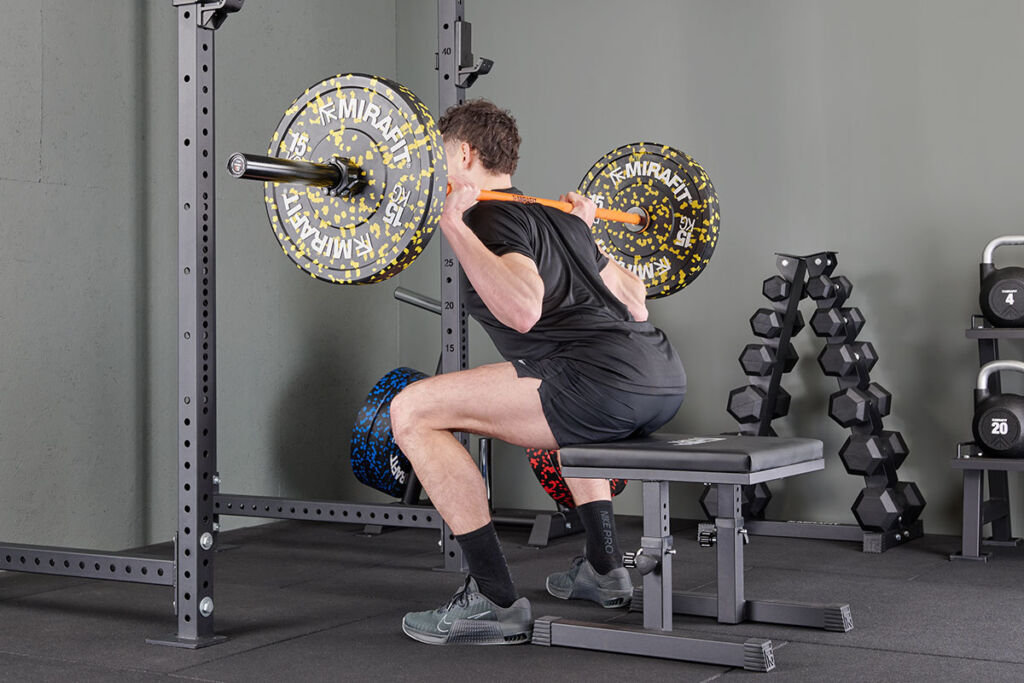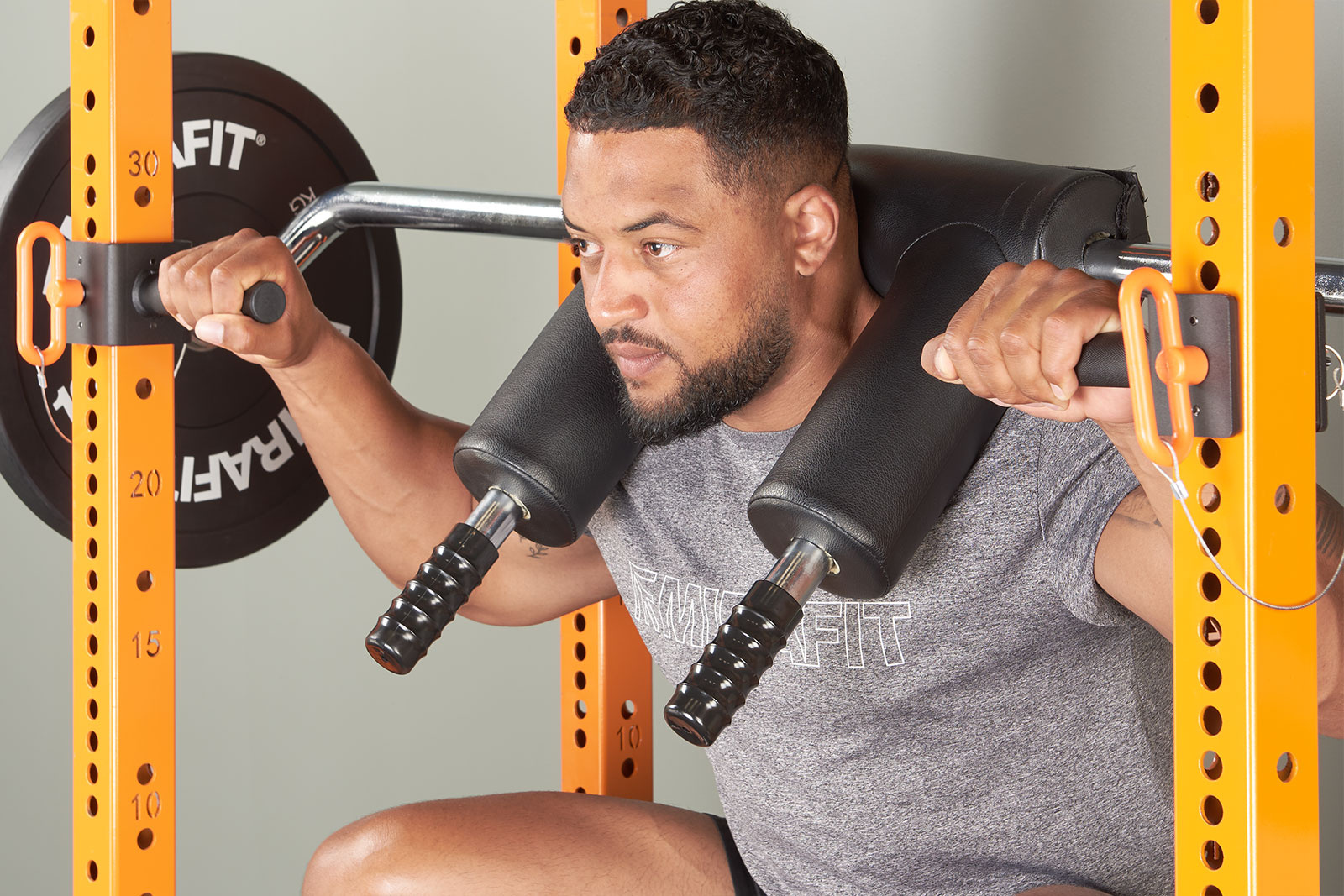

The Hatfield squat is an adaptation of the traditional barbell squat where the user holds onto squat handles or Power Cage uprights. This squat originated from Dr. Fred Hatfield, an American powerlifter who used it to work his way up to a 460kg squat. Consequently, the Hatfield squat can be useful for a wide range of lifters spanning from beginners through to advanced lifters.


What Are The Benefits of a Hatfield Squat?
By using a safety Squat Bar instead of a straight barbell, you are able to hold onto the power rack in front of you to support with balance and help achieve a sufficient depth. This extra stability allows you to focus more on the movement of your lower body, increase the range of motion and lift heavier weights safely.
How Do You Perform a Hatfield Squat?
To perform a Hatfield squat, you need to use a safety bar with your hands positioned in front of you - either on a pair of squat handles, on the power rack uprights, or on a racked barbell (make sure it’s weighed down).
Then, similar to a traditional squat, engage your core to prevent your chest from collapsing forwards, stand with your feet shoulder width apart and toes facing outwards slightly. In terms of depth, the ideal range of motion is from standing to approximately parallel. During the upward phase, use the handles or power rack to help keep an upright back position so that the correct muscles are engaged in order to protect the back. Maintain a steady tempo of 3-4 seconds during each phase.
What Muscles Does the Hatfield Squat Target?
Hatfield squats target the Quadriceps, Glutes, Hamstrings, Core and Adductors. These muscles work to stabilise the hips through each repetition so that the safety squat bar remains upright rather than shifting forwards and causing the hips to flex beyond the point which is deemed beneficial for squatting.
Hatfield Squat vs Traditional Barbell Squat
Firstly, because you are able to hold onto the Squat Handles or power rack during the Hatfield squat, there is less strain placed on the upper body. This allows you to target and strengthen your quads - great if you have a strong lower back and weaker legs. As you have increased support, you are also able to load the safety bar heavier than during a traditional squat.
In summary, the Hatfield squat is an ideal squat variation for building lower body strength among not only beginners and advanced lifters, but also those recovering from injury because it provides extra support and stability. If the traditional barbell squat is a personal favourite in the gym, then adding the Hatfield squat as an accessory exercise is a no-brainer as it can add variety to your workouts, keep squatting fun and assist in overcoming performance plateaus.
For more content, follow us on Instagram, YouTube, TikTok, and on our official Mirafit Facebook page.
Tags: Equipment > Bars and Weight Plates ; Equipment > Power Racks and Cages ; Exercise Type > Strength