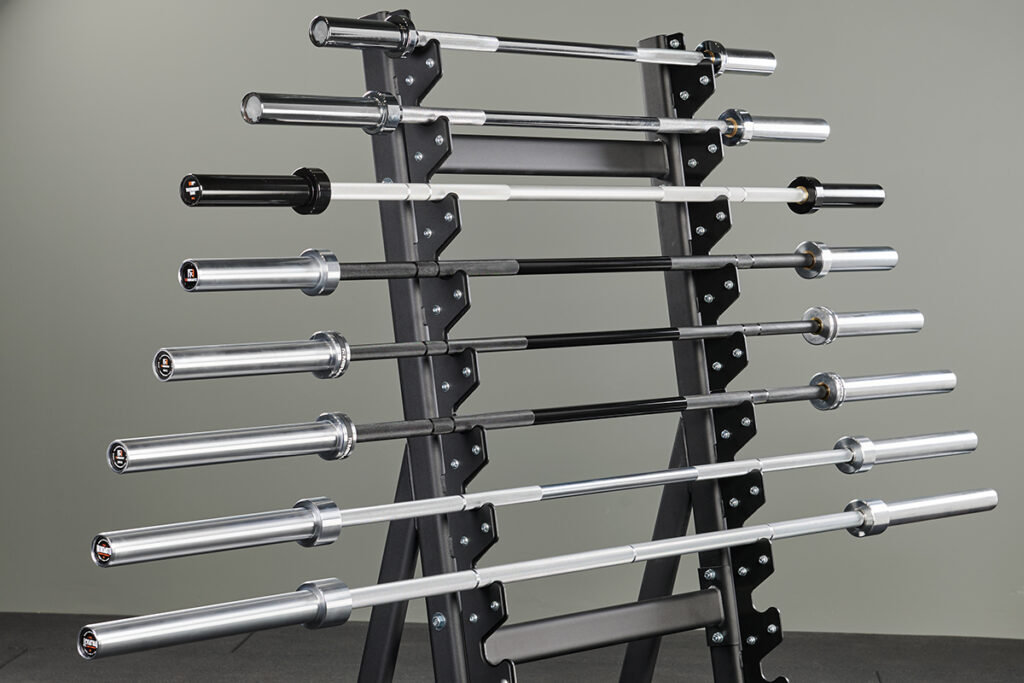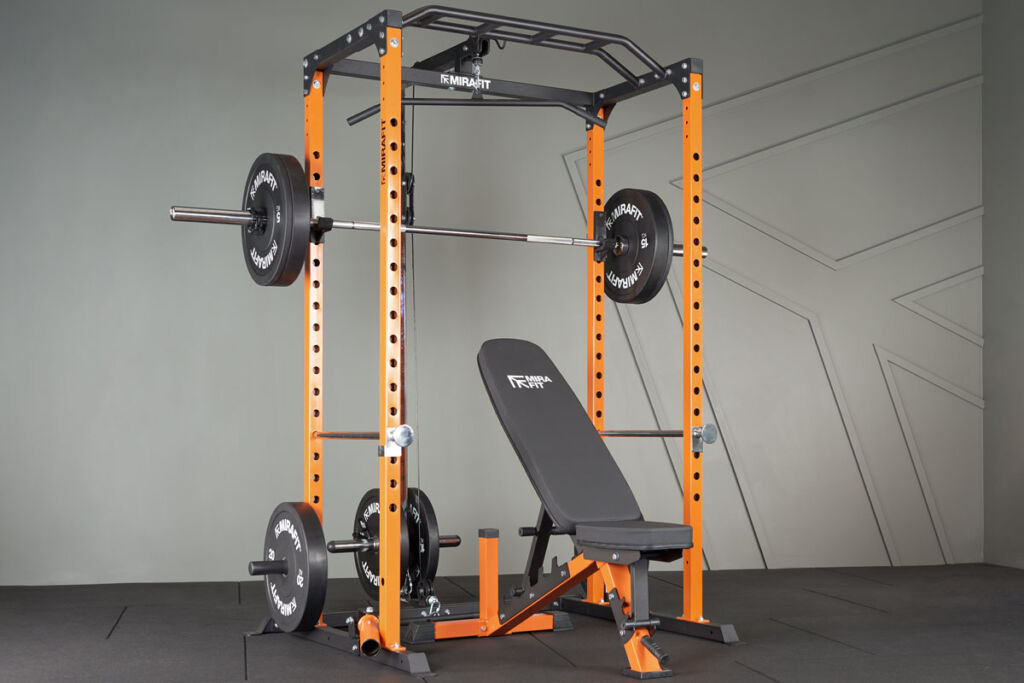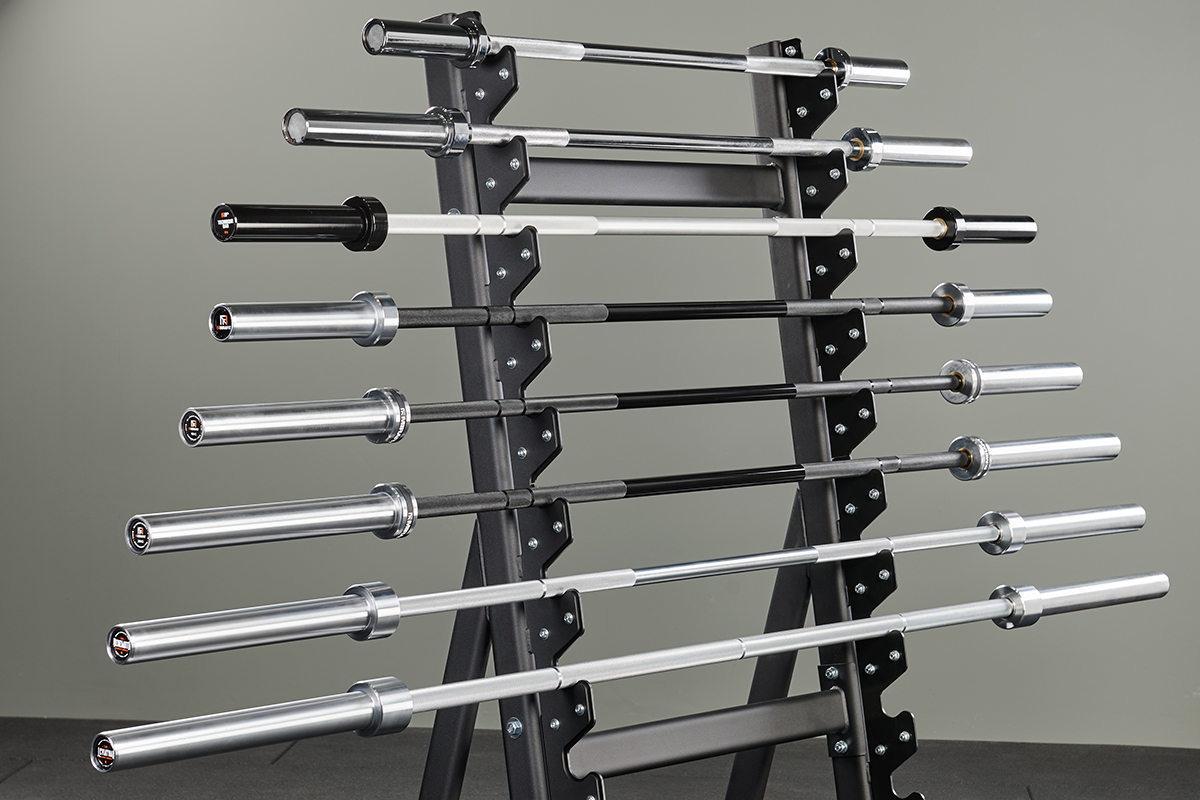
For many people, a Barbell is the centre piece of their home gym. A bar and weight plate set will build muscle and increase strength, and if you’re interested in powerlifting or Olympic weightlifting, a barbell is an essential component of those sports.
Whether you’re building your first home gym, or you’re looking to upgrade your barbell, some of the technical terms may be a bit confusing. We’ve put together a full glossary of barbell terms to help match you with the perfect weight bar.
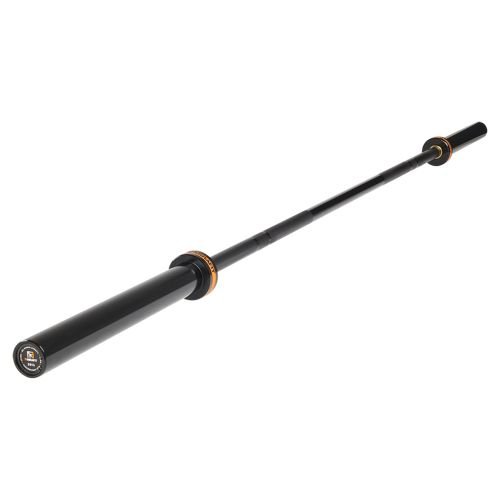
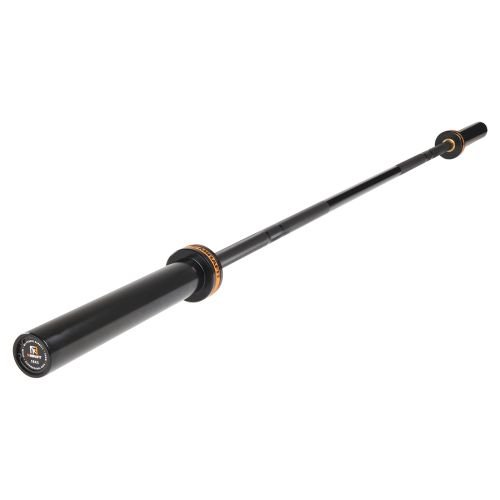
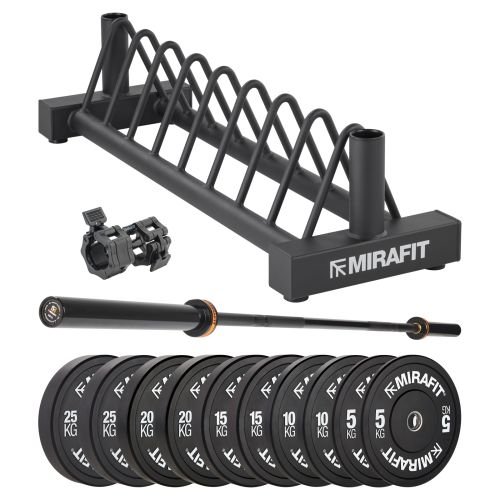
Mirafit M3 Olympic Barbell with Bumper Plate Set and Weight Storage Stand

- Accuracy
- Bearings
- Bushings
- Centre Knurling
- Coating
- Collars
- Competition Barbell
- Construction
- End Cap
- Hybrid Barbell
- Inside Collar
- IPF Specification
- IWF Specification
- Knurl Marks
- Length
- Loadable Sleeve Length
- Olympic Bar vs Standard Bar
- Power Bar
- PSI
- Rackable
- Shaft
- Shaft Diameter
- Sleeves
- Sleeve Diameter
- Specialist Bar
- Spin
- Technique Bar
- Tensile Strength
- Weight: 15kg vs 20kg
- Whip
- Yield Strength
Accuracy
Accuracy describes how closely a barbell’s actual weight and dimensions match the stated specifications. Higher-quality bars are generally manufactured to tighter tolerances, meaning their weight, length and diameter vary less when compared to the advertised figures. Barbell accuracy is especially important if you’re looking to compete in powerlifting or weightlifting, as you’ll want to take your training figures into account on competition day.
Bearings
Bearings sit inside the bar sleeves and allow the sleeves to rotate independently from the shaft. Needle bearings are the most common choice for Olympic weightlifting bars because they provide fast, smooth rotation while supporting high radial loads. Ball bearings and other systems may also be used but are less common in full-size barbells.
Bushings
Bushings, like bearings, allow the sleeves to rotate around the barbell shaft, but generally provide a slower, more controlled spin than bearings. They are durable, relatively low-maintenance and well suited to powerlifting and general strength training. Some barbells use a combination of bushings and bearings to balance smooth rotation, stability and durability.
Centre Knurling
Centre knurling is an additional textured section in the middle of the barbell shaft. It is particularly beneficial for powerlifting, as it helps the bar grip the upper back during squats, improving stability and reducing the likelihood of the bar slipping. Centre knurling is also required under IWF specifications for men's Olympic weightlifting bars.
Coating
Most barbells are made from steel and use a surface finish to influence corrosion resistance, durability, appearance and grip feel. Stainless steel is not a coating, but it is commonly compared alongside coated finishes because it provides corrosion resistance while retaining a more natural steel feel.
• Bare Steel - No applied coating, giving direct contact with the steel and a natural grip feel, but requiring regular cleaning and oiling to limit rust.
• Black Oxide - A thin conversion finish that preserves much of the steel feel and gives a dark appearance but offers only moderate corrosion protection.
• Zinc - An economical plated finish, commonly brightly coloured or black, that improves corrosion resistance but may wear in high-contact areas over time.
• Hard Chrome - A hard, durable plated finish widely used on commercial and competition-style bars; it is easy to maintain but can feel smoother than bare steel.
• Cerakote - A thin ceramic-based coating available in many colours, offering strong corrosion resistance and extensive design options, though heavy rack contact can still mark the finish.
• Stainless Steel - A corrosion-resistant steel rather than a coating. It offers a natural grip feel and low maintenance, although it is usually more expensive than coated bars.
Collars
Barbell Collars are removable attachments that secure weight plates on the sleeves and help prevent them from shifting or sliding off during use. Common styles include spring handles, clamp-style collars, and spinlock collars. Clamp collars are the quickest to add/remove, but collar choice ultimately comes down to preference. The exception is competition weightlifting which uses calibrated collars that typically weigh 2.5kg each.
Competition Barbell
A competition bar is designed to meet the dimensional, weight and performance requirements set by a recognised governing body. A bar may meet competition specifications for training purposes, but only equipment carrying the relevant approval or certification can be used in sanctioned events.
Construction
Most barbells use a steel shaft, two rotating sleeves and an internal bearing or bushing system. The sleeves are commonly retained with snap rings or circlips on higher-quality Olympic bars, while some entry-level bars use a hex bolt which is fixed through the end of the sleeve assembly.
End Cap
End caps are fitted into the outer ends of the sleeves and are commonly used for branding and identification. They may show information such as the bar’s weight, model, finish or intended use. This is particularly important in a commercial setting where you may have several barbells of different weights.
Hybrid Barbell
A hybrid bar combines several characteristics associated with both Olympic weightlifting and powerlifting bars. It normally has moderate knurling, controlled sleeve rotation and occupies a medium ground between stiffness and whip. Hybrid bars are great for use as an all-purpose barbell, making it suitable for anyone who wants to train for general strength or for a broad range of lifts rather than to compete in specific sports.
Inside Collar
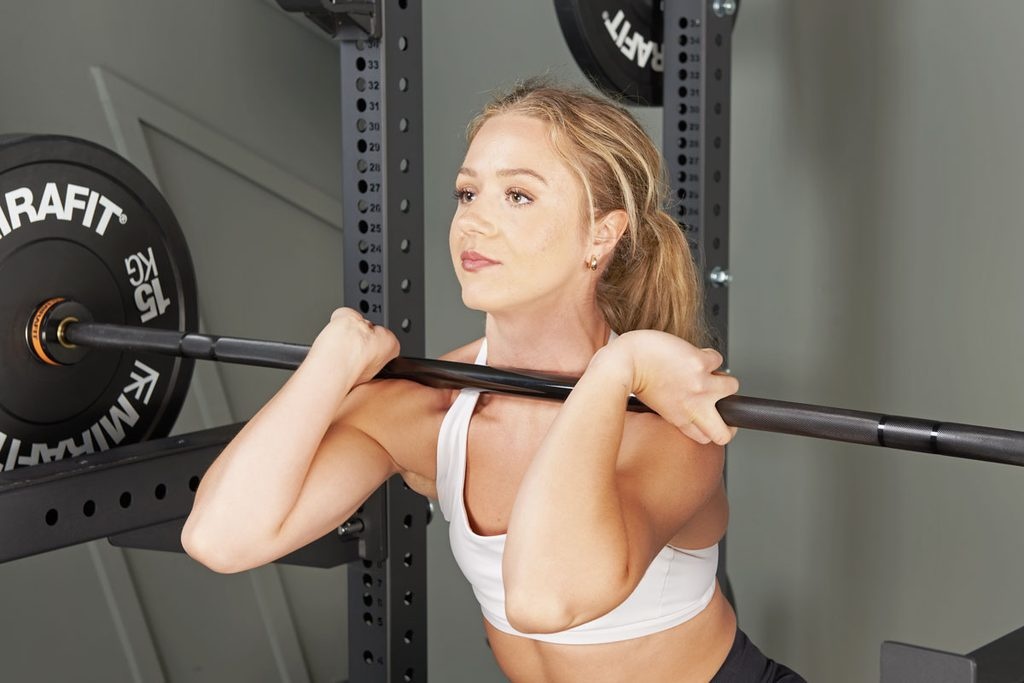
The inside collar is the fixed raised section at the inner end of each sleeve. These are the stopping points that plates slide against, and they help define the distance between the sleeves.
IPF Specification
IPF stands for International Powerlifting Federation. Bars that are made to IPF specifications follow requirements covering measurements including weight, dimensions, shaft diameter, knurling layout and tolerances, and are suitable for training at home. Only IPF-approved equipment can be used in IPF-sanctioned competition.
IWF Specification
IWF stands for International Weightlifting Federation. Barbells made to IWF specifications follow requirements for measurements including weight, dimensions, shaft diameter, markings and tolerances, making them suitable for training at home. Only IWF-certified equipment can be used in IWF-sanctioned competition.
Knurl Marks
Knurling is the textured pattern machined into the shaft that improves grip. Passive or mild knurling prioritises comfort for high-repetition exercises and general training, medium knurling balances comfort and grip, and aggressive knurling provides maximum grip for heavy lifts. Knurling patterns include hill-style, where the knurling is cut into diamonds, volcano-style which has flatter-topped points, or mountain-style which has sharper peaks.
Length
Length is the overall measurement of the bar from end to end. Longer bars generally provide more space between the sleeves and more loadable sleeve length, while shorter bars can be easier to store and use in compact gyms. Overall length alone does not confirm whether a bar is rackable; a 6ft bar is not rackable, while a 6ft international bar is rackable because it has a longer shaft length and shorter sleeves.
Loadable Sleeve Length
Loadable sleeve length is the usable part of each sleeve that can accommodate weight plates and collars. It is particularly important when using thick bumper plates, as the sleeves may run out of space before the bar reaches its stated maximum load.
Olympic Bar vs Standard Bar
Standard Bars use approximately 25mm or 1-inch sleeves for standard weight plates, while Olympic Bars use approximately 50mm or 2-inch sleeves for Olympic weight plates. They aren’t cross-compatible, so it’s important that you get the right kind of plates for your bars. Olympic bars are typically stronger than standard bars, have a higher load capacity and use rotating sleeves, while standard bars can be useful if you have minimal storage space.
Power Bar
A power bar is primarily designed for powerlifting, making it most suitable for the squat, bench press and deadlift exercises. Typical features include a stiff 29mm shaft, minimal whip, strong knurling with powerlifting knurl marks, centre knurling and bushing-based sleeves for a slower and controlled rotation.
PSI
PSI means pounds per square inch and is the unit commonly used to state the tensile or yield strength of barbell steel. A higher figure indicates that the steel withstands greater stress in that particular test, but PSI should be considered alongside shaft diameter, construction, intended use and product warranty rather than treated as the sole measure of a bar’s quality.
Rackable
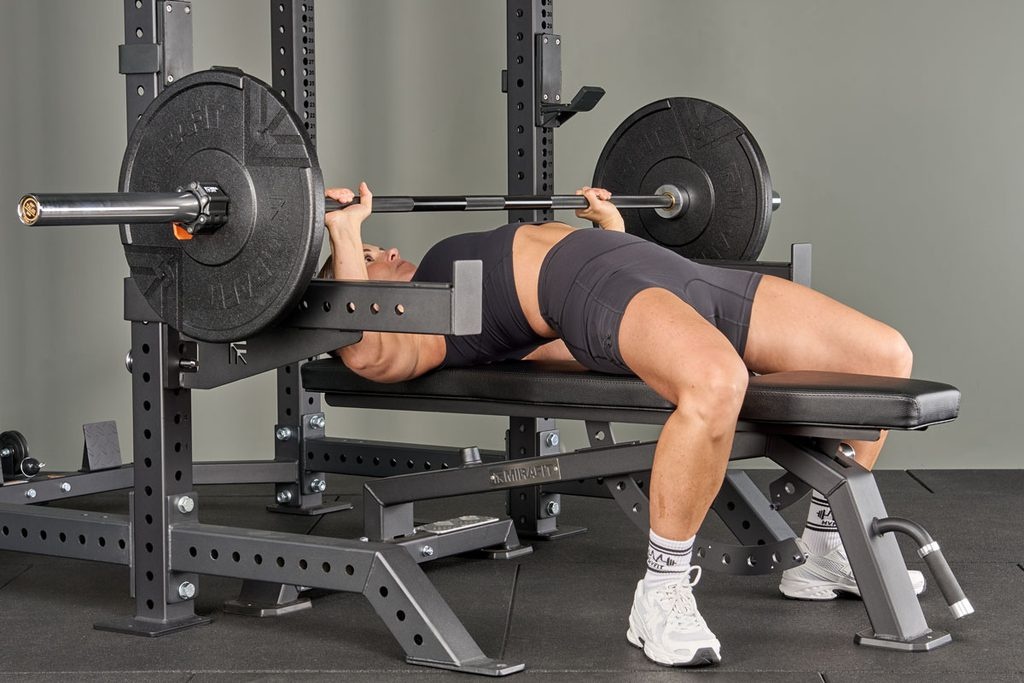
A rackable bar has sufficient shaft length between its inside collars to sit securely across the uprights of a compatible squat rack, power rack or bench press rack. In a full-size rack, only 7ft and 6ft international bars are long enough to be rackable, while regular 6ft bars and shorter barbells will not. If you’re using an adjustable squat rack or a pair of squat stands, shorter barbells may be rackable. Check the distance between the inner collars against the outside width of the rack to make sure it’s suitable.
Shaft
The shaft is the central steel section of the bar that the lifter grips. The diameter, knurling, material and finish influence the bar’s feel, stiffness, whip and resistance to corrosion.
Shaft Diameter
Shaft diameter is the thickness of the grip section and has a major effect on handling and stiffness. Common sizes are 25mm for 15kg women’s weightlifting bars, 28mm for 20kg Olympic weightlifting bars, 28.5mm for many hybrid bars and 29mm for power bars; specialist squat bars may be 30mm or thicker, while some deadlift bars are around 27mm.
Sleeves
Sleeves are the rotating sections at the ends of the bar where the plates are loaded. They contain the bearing or bushing system and may have a smooth or lightly ribbed surface. A ribbed barbell sleeve increases friction and produces the classic zip sound when plates are loaded.
Sleeve Diameter
Sleeve diameter determines plate compatibility. Standard bars generally have approximately 25mm or 1-inch sleeves, while Olympic bars have approximately 50mm or 2-inch sleeves. Some specialist bars, such as our studio barbells, have 30mm sleeves. Always match the plates and collars to the bar’s stated sleeve diameter.
Specialist Bar
A specialist bar is designed for a particular movement, training goal or mobility requirement rather than general barbell use. Examples include trap bars, safety squat bars, cambered bars and deadlift bars. These may alter the load position, grip or movement pattern.
Spin
Barbell spin describes how freely and smoothly the sleeves rotate around the shaft. A fast, consistent spin is valuable during Olympic weightlifting exercises such as the snatch and clean and jerk because it reduces rotational force at the hands and wrists. A reduced spin, with a slower and more controlled rotation is normally used for powerlifting and general strength workouts.
Technique Bar
A technique bar is a lightweight barbell that can range from 2.2kg to 10kg and is designed for learning and refining technical exercises before progressing to a 15kg or 20kg bar. It is useful for beginners, junior athletes, rehabilitation work and experienced lifters practicing technique with low loads.
Tensile Strength
Tensile strength is the maximum stress the bar’s steel can withstand while being pulled before it begins to fail, and it is usually stated in PSI. Manufacturers may also load-test finished bars, but a maximum test load is not the same measurement as tensile strength and neither figure alone guarantees long-term resistance to bending.
Weight: 15kg vs 20kg
Barbells are available in many weights, but 15kg and 20kg are the main competition formats. A 15kg Bar typically has a 25mm shaft. This is the women’s IWF competition weight, and they can also feel more comfortable for lifters with smaller hands. A 20kg bar with a 28mm-29mm shaft is used for men’s IWF competition and IPF powerlifting. Your bar choice should be based on the lifting discipline, required specifications and manageable starting load rather than gender.
Whip
Whip describes the way a bar bends and rebounds dynamically under load. More whip can benefit Olympic weightlifting by contributing to the timing of explosive lifts, while a stiffer bar with less whip provides greater stability for squats and bench presses. Shaft diameter, length, steel properties and loading all affect the amount of whip a barbell has.
Yield Strength
Yield strength is the stress at which the steel begins to deform permanently rather than returning fully to its original shape. It is reached before tensile failure, so a bar can bend permanently without breaking if its yield strength is exceeded. Yield strength is a useful complement to tensile strength when assessing resistance to permanent bending.
When it comes to picking a barbell, there are many things to consider. Hopefully this guide has helped you make sense of the different terms and measurements you’ll find with bars. If you’re new to training, check out our illustrated Barbell Exercise Guide where you’ll find dozens of step-by-step exercises.
For more content, follow us on Instagram, YouTube, TikTok, and on our official Mirafit Facebook page.
Tags: Equipment > Bars and Weight Plates ; Exercise Type > Strength ; Misc. > Gym Planning