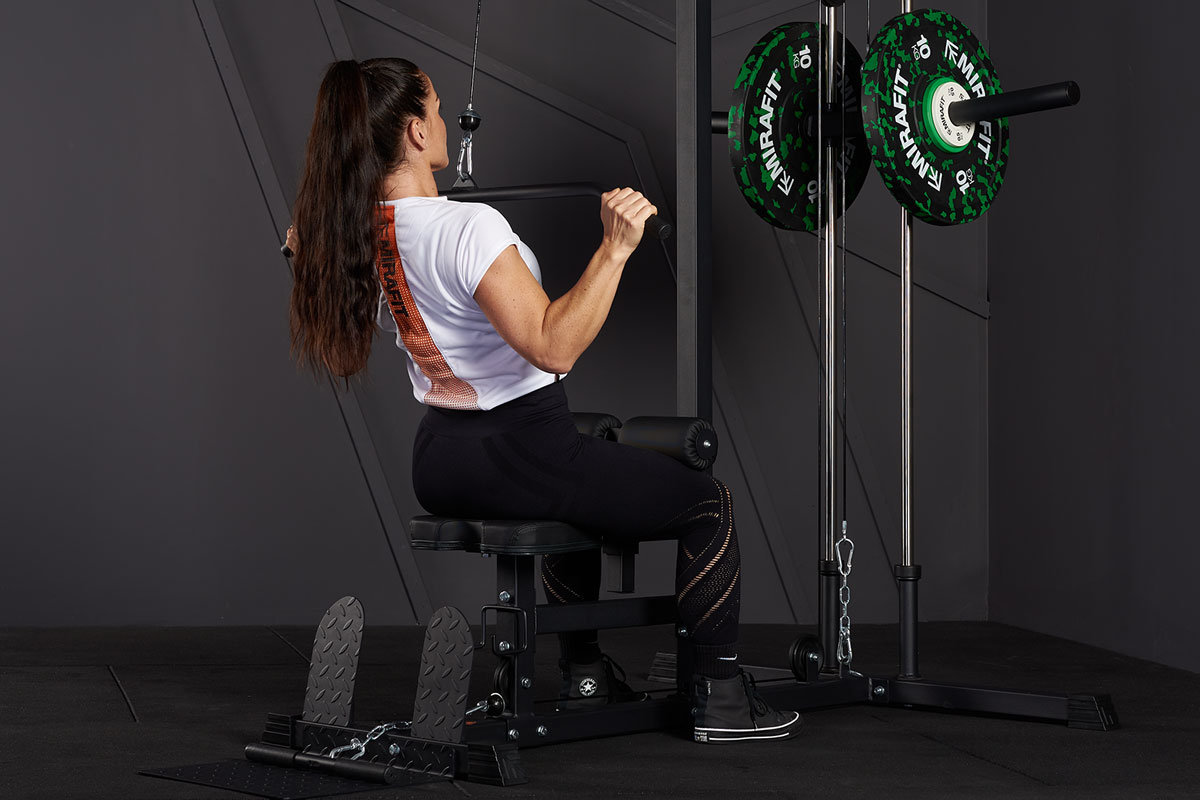
Upper body pulling strength is an essential component of high-level performance in a wide variety of tasks, like swimming, contesting for a ball in a rugby ruck, or keeping the barbell close to your body in the first and second pull of a clean or snatch. Some of the muscles responsible for upper body pulling are lats, traps, biceps, posterior deltoids and rhomboids. Training these with exercises like lat pulldowns should be a high priority for improving athletic performance.
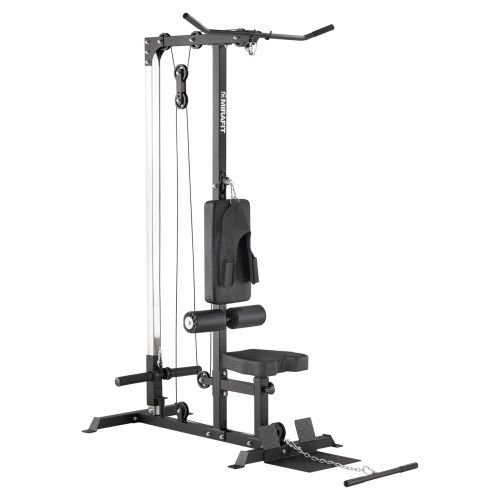
How To Do A Lat Pulldown
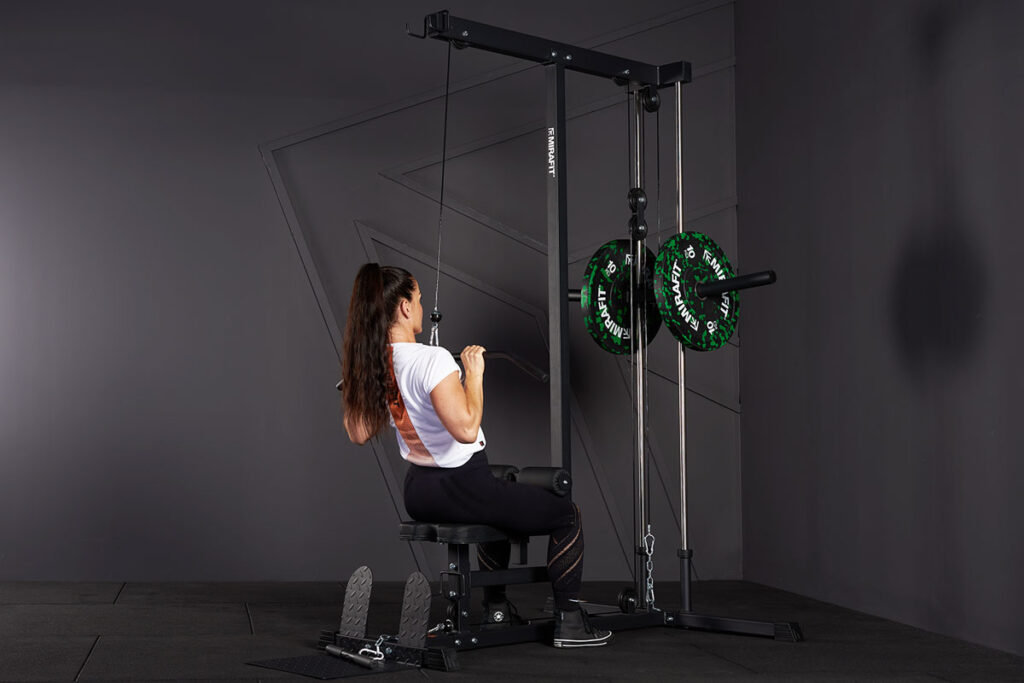
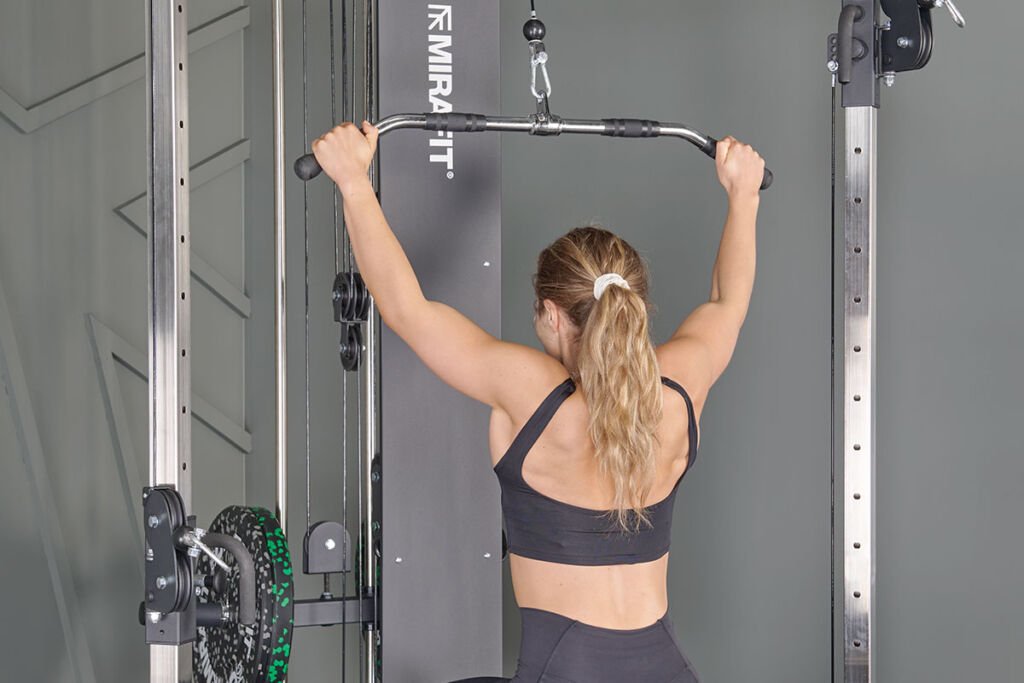
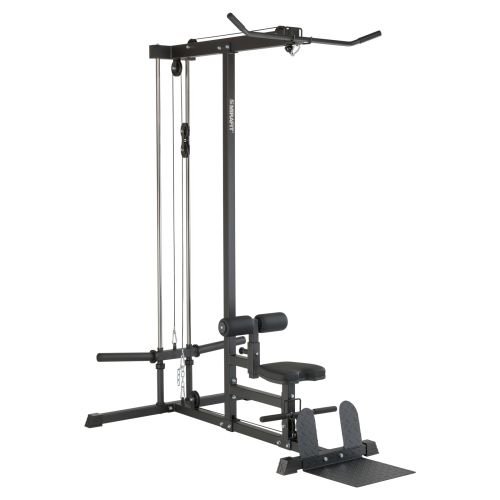
• Sit on a Lat Pulldown Machine with your legs anchored under the thigh pad.
• Hold the handle with your hands approximately shoulder width apart, palms facing forward.
• Keeping your torso vertical, and legs pushing into the thigh pad, pull the handle to just below chin height, with your elbows pointing towards your back pocket.
• Slowly reverse the movement to complete the reps.
Tip - Pick a weight where you are strong enough to pause at any point of the movement to help you find a weight that you can control smoothly.
Benefits - A key benefit of the lat pulldown is the ability to perform higher volume upper body training than you would be able to with a more intense exercise like a pull up. If you can’t do 5+ pull ups, with your bodyweight, then you need to incorporate alternative upper body pulling exercises; enter the lat pulldown.
Lat Pulldown Variations
1 - Standing Lat Pulldown
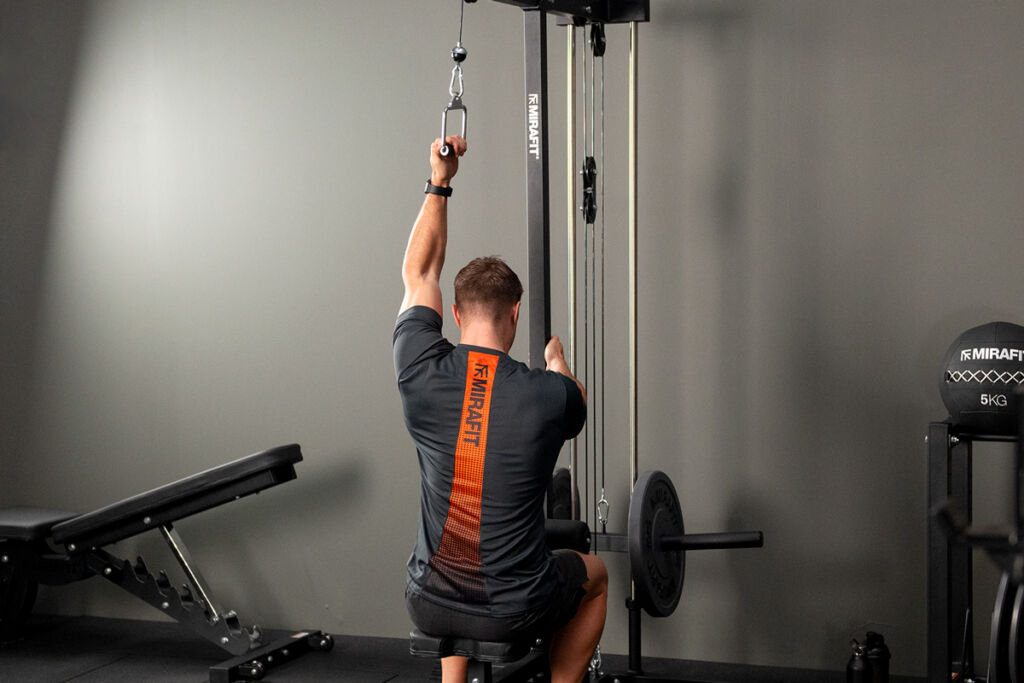
The standing lat pulldown doesn’t have the thigh pad to assist you. This isolates your upper body pulling muscles more because you cannot press your legs against the thigh pad for leverage. This is great if you struggle to get the most out of your upper body in a traditional lat pulldown or find that you ‘cheat’ too much on regular pulldowns.
2 - Kneeling Lat Pulldown
Similar to the standing variation, the kneeling lat pulldown removes the lower body involvement, but with the additional benefit of an increased range of motion as the upper body is further from the cable pully. This is a good variation if you are too tall to get a full range of motion in a standing position.
3 - Single Arm Lat Pulldown
The single arm pulldown allows you to get maximal range of motion out of your pulldowns due to an increased freedom to adduct and rotate in the overhead position. This is great for improving mobility and building muscle by loading your pulling muscles at long muscle lengths. It also a great way to reduce side to side imbalances because you can target your weaker side.
4 - Wide Grip Lat Pulldown
The wide grip pulldown reduces the involvement from the bicep, making it a great variation if you are looking to isolate your upper back. If you already do a lot of work on your arms, with exercises like bicep curls or chin ups, this is a good Pulldown Machine variation for you.
5 - Narrow Grip Lat Pulldown
Conversely to the wide grip, the narrow grip increases the involvement of the biceps in your pulldown. This is a great variation if your arms are your biggest weakness during your pulls or if you are looking for a little more bang for buck in your lat pulldown. It is also a great way to work up to your first bodyweight pull up!
6 - Reverse Grip Lat Pulldown
The reverse grip puts a greater focus again on the biceps, along with your forearms. It is also a great exercise for working on your upper body mobility in a more internally rotated position than other traditional pulling exercises, which is really important for throwing athletes like pitchers in baseball. This is a great variation if you are looking to build up to your first chin up!
7 - Behind the Neck Lat Pulldown
The behind the neck pulldown places extra effort on the shoulders and is great for improving shoulder mobility behind your head. This is great for people that perform barbell snatches or any other overhead exercises. It is also helpful for the wider population, of whom tend to struggle with mobility in the shoulders and upper back. The constraint of pulling the handle behind your head helps to reduce compensations that may occur in other pulldown variations.
8 - Resistance Band Lat Pulldown
Resistance bands provide variable resistance; they are only hard at the part of the lift where the band is stretched. For a pulldown, this means that it is only difficult at the bottom position. This is a great option for those struggling with pain or injury in the overhead position because it provides the least resistance in the most painful position. Besides this, it is also a great at home variation if you don’t have access to a cable machine at your home gym.
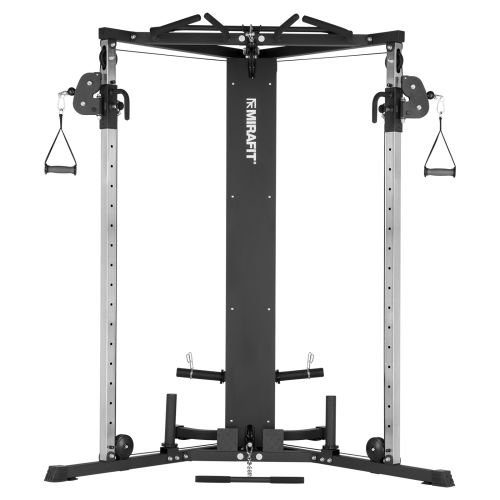
Everyone should be performing pulling exercises in their training. But this can be hard if you find your upper body pull days getting boring. If this sounds like you, be sure to save this list of lat pulldown variations. Perform 1-2 of these variations a week, swapping the variations every few weeks to keep things fun. This is important because fun helps us work harder and working harder helps us get stronger! Looking to grow your back in a different way? Check out our range of Back Machine Gym Equipment.
For more content, follow us on Instagram, YouTube, TikTok, and on our official Mirafit Facebook page.