
If you’re looking for an exercise that brings together strength and mobility, the pullover is a perfect addition to your training programme. It’s a versatile exercise that can be tweaked in several ways to target different muscles, ranges in intensity and can be done with a variety of equipment.
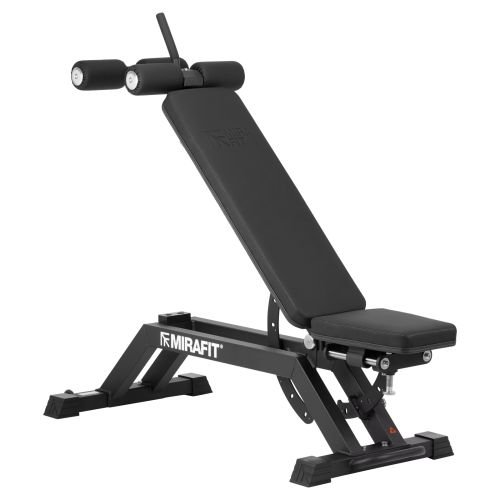
Mirafit M460 Adjustable Weight Bench with Leg Roller Attachment

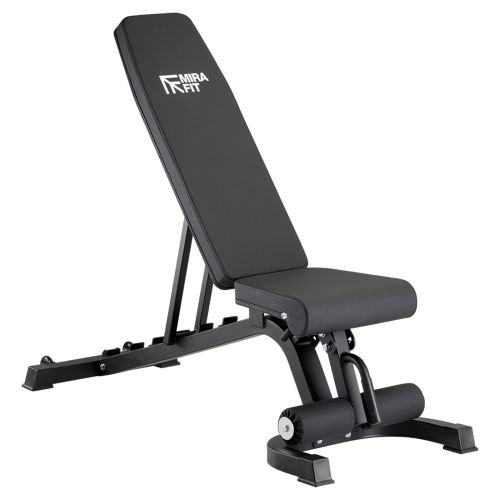

In this blog, we will look at your classic dumbbell pullover and explore how you can vary it using different tools, bench angles and body positions. A pullover is easily doable whether you’re training from home or at the gym. Understanding these variations can help you make smarter gym equipment choices and enable you to keep progressing in your training.
1 - Standard Dumbbell Pullover

• Lie flat on a bench with your feet on the floor, knees bent.
• Hold an Adjustable Dumbbell with both hands (make a diamond shape with hands) above the chest, arms are extended but keep a soft bend to the elbow.
• Slowly lower the dumbbell back and behind the head in an arc until you feel a stretch in your chest and lats.
• Stop when your biceps come in line with your ears.
• Bring the weight to the start position in a slow and controlled manner.
What Are The Benefits of Dumbbell Pullovers?
The dumbbell pullover is great for challenging both the chest and back. It is also great for improving shoulder mobility and strength, whilst building control through the entire upper body. One of the great things is that it can be done with minimal equipment, making it perfect for home workouts.
2 - Incline Dumbbell Pullover

An incline pullover is performed on a bench set at roughly 30-45 degrees instead of a flat bench. By setting the bench position to an incline this will put slightly more emphasis on the upper chest and reduce the muscle recruitment in the lats compared to the flat version.
3 - Decline Dumbbell Pullover
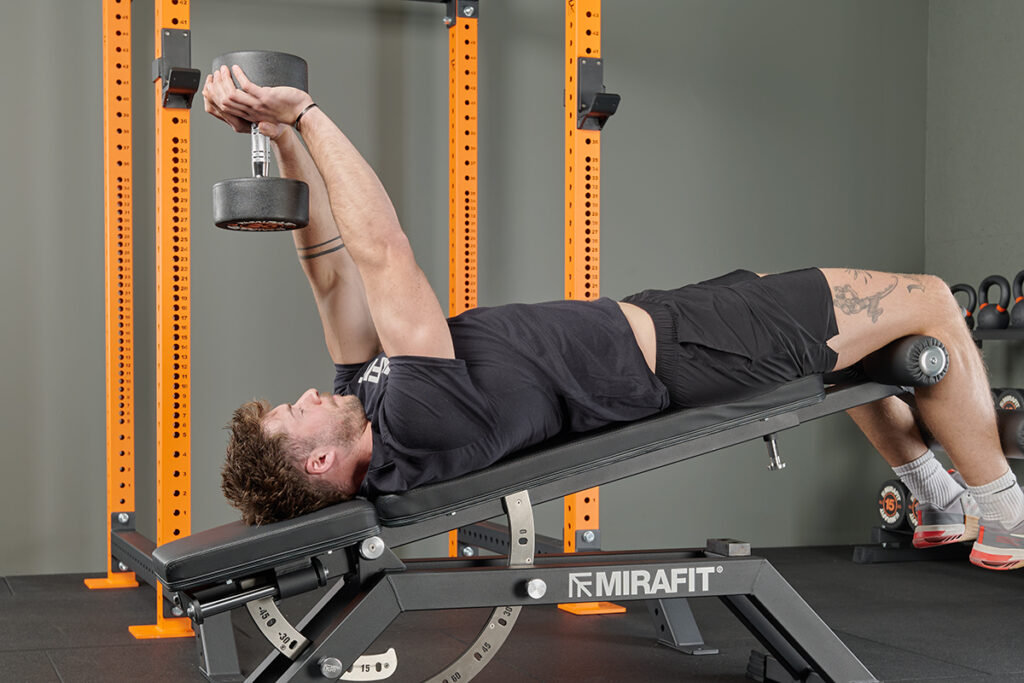
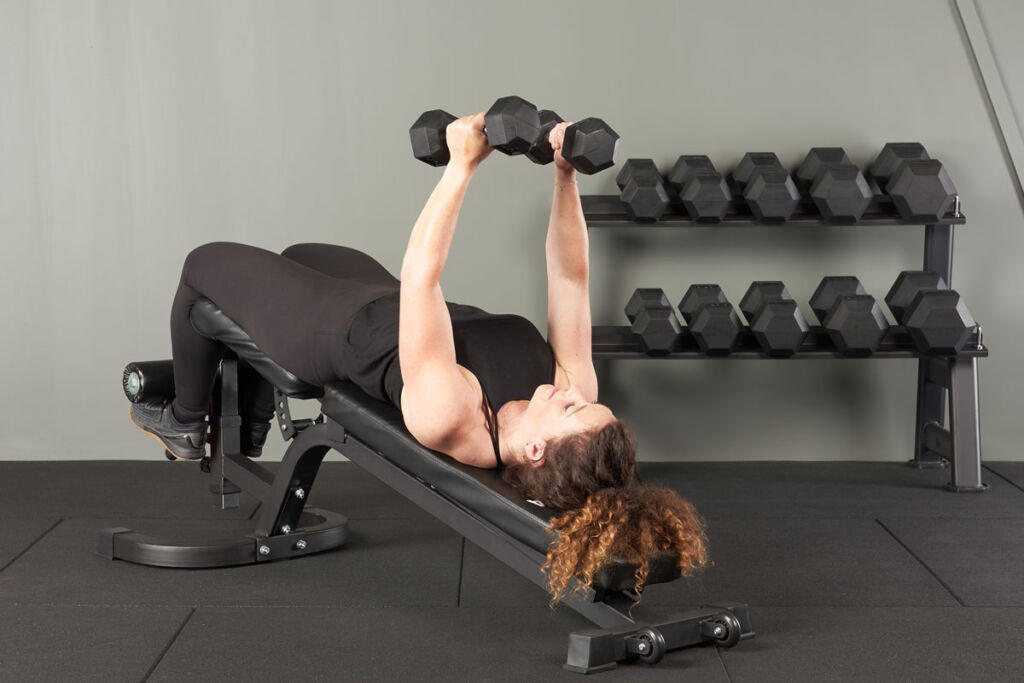
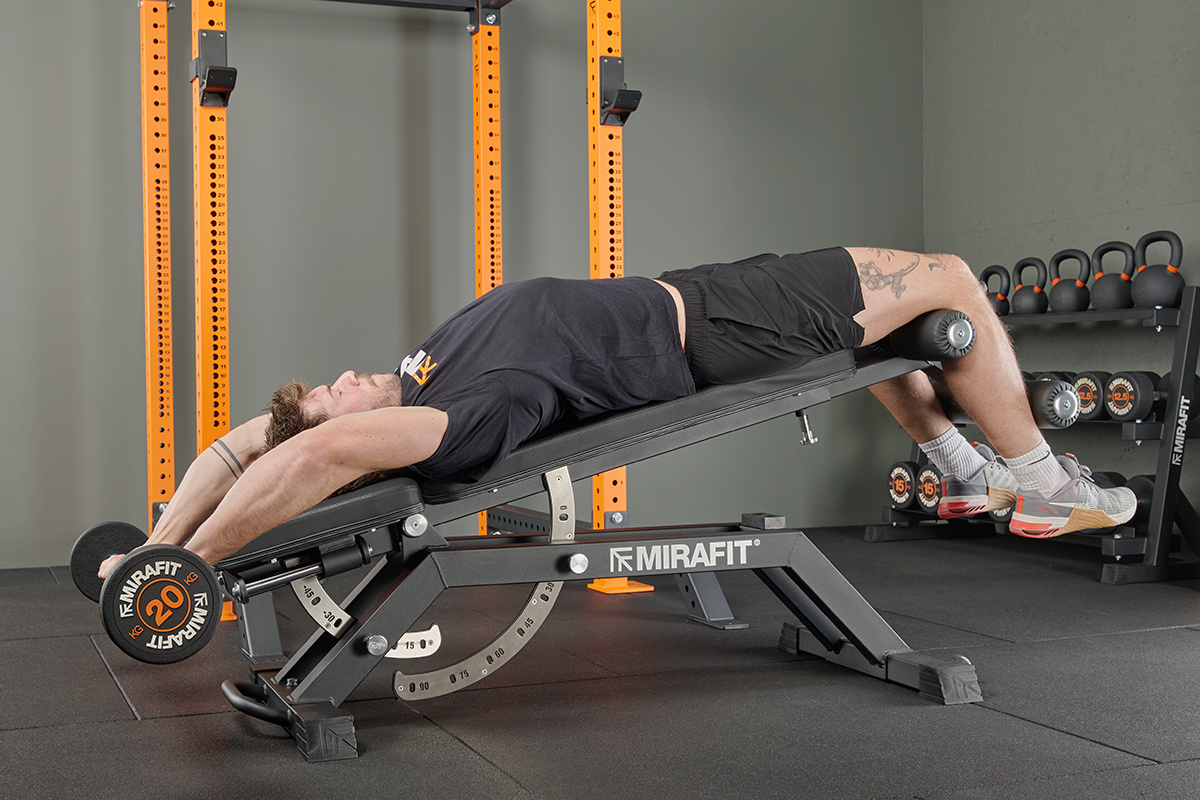
Instead of a flat bench, you would use a decline bench or Adjustable Weight Bench and set it 15–30-degree decline. This changes the angle of movement and direction of resistance. A decline pullover will increase the stretch and recruitment of the lats. It will also place more tension on the lower chest and core.
4 - Lying Cable Pullover
This variation requires a Cable Crossover; it is performed on a bench with the pulley set at the bottom and the machine behind your head. It uses either a rope attachment or straight bar. A cable machine provides constant tension throughout which is great for improving muscle growth and is also a smoother, joint friendly option.
5 - Barbell Pullover
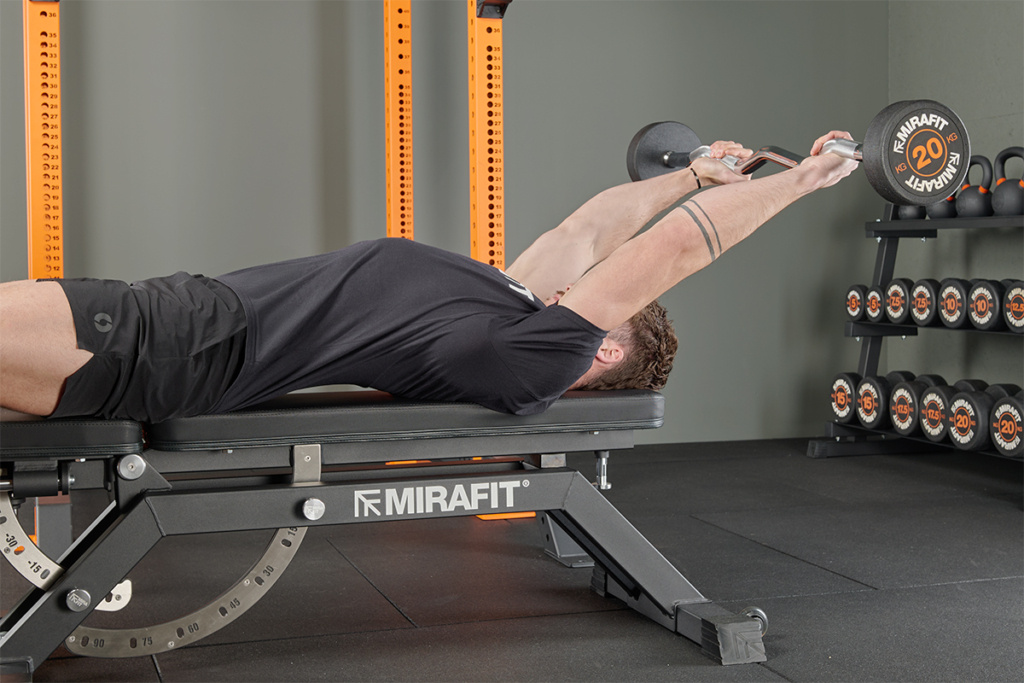
This variation uses a straight barbell or an EZ barbell instead of a dumbbell. The grip is overhand and shoulder width. Using a barbell can allow for heavier weight and often feels more stable than using a single dumbbell, as it encourages bilateral symmetry.
6 - Dumbbell Pullover with Feet on Bench
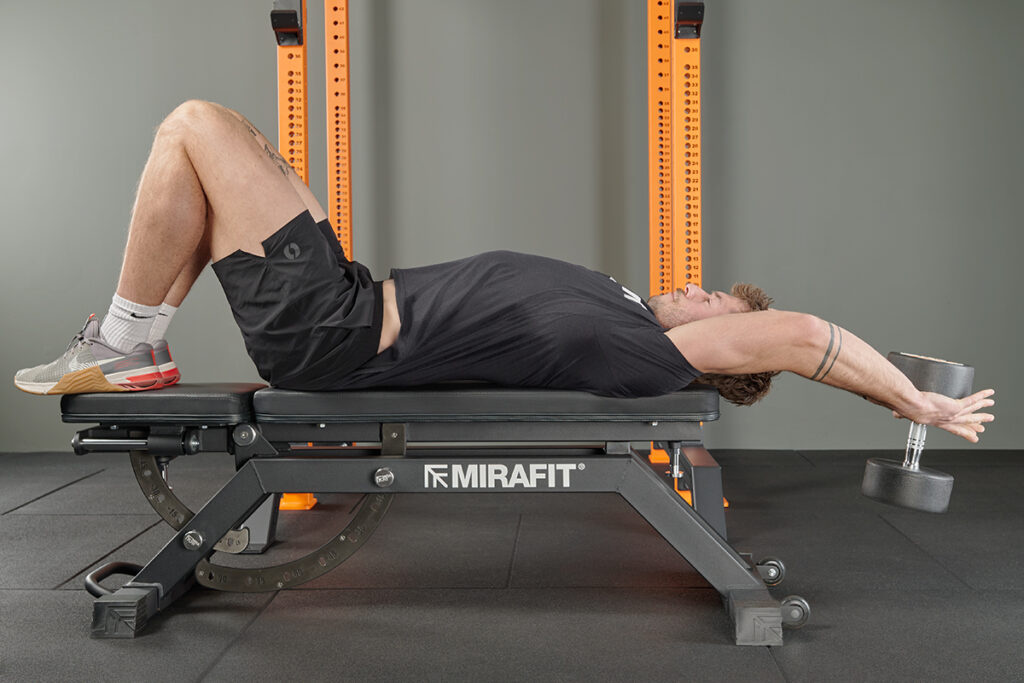
The feet are placed on the bench instead of keeping the feet on the floor, knees bent at 90 degrees. By placing the feet on the bench, you remove some of the lower body stability. This puts more emphasis on the core and glutes to maintain the alignment.
7 - Dual Dumbbell Pullover
A dual dumbbell pullover uses two dumbbells, holding one in each hand, instead of using one dumbbell held in both hands. The dual dumbbell pullover is a unilateral exercise, which will help to improve balance and stability as it increases the demand on the shoulders and core.
8 - Stability Ball Dumbbell Pullover
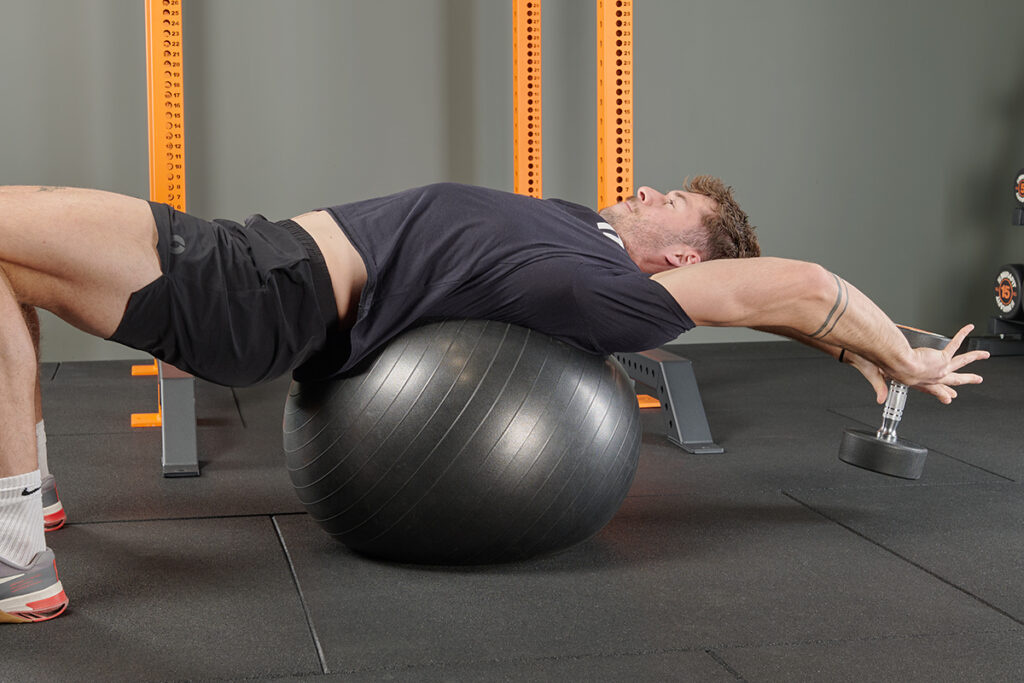
Instead of using a bench and lying all the way back, it is just the upper back on a stability ball, with your feet on the floor and hips elevated into the air. This pullover variation involves a lot more muscles when executing the exercise, it becomes a full body challenge. Activating the glutes to keep the hips elevated, the core whilst also enhancing mobility and control.
Which Pullover Variation Should You Do?
• Incline - More upper chest, slightly less lat stretch.
• Decline - Deeper lat stretch, increased targeting of chest and core.
• Barbell - Heavier load, symmetrical strength and easier on the wrists if using an EZ bar.
• Feet on bench - Added core challenge, reduced lower body stability.
• Cable - Constant tension, joint friendly control.
• Dual dumbbell - Unilateral control, balance and symmetry.
• Stability ball - Full body, improved stability and mobility.
• You can also mix and match these, such as performing an incline barbell pullover or a decline dual dumbbell pullover.
So, no matter your goal or set up there is a pullover variation that will suit your needs and reach your desired goal. I recommend experimenting with a few and seeing which one works best for you.
For more content, follow us on Instagram, YouTube, TikTok, and on our official Mirafit Facebook page.
Tags: Equipment > Bars and Weight Plates ; Equipment > Benches ; Equipment > Cable Machines ; Equipment > Dumbbells ; Exercise Type > Strength